Therapy Finder - Rebranding Simple Practice's Tool
Want to skim through this case study? I got you covered.
Here's a 1 min TL;DR version.
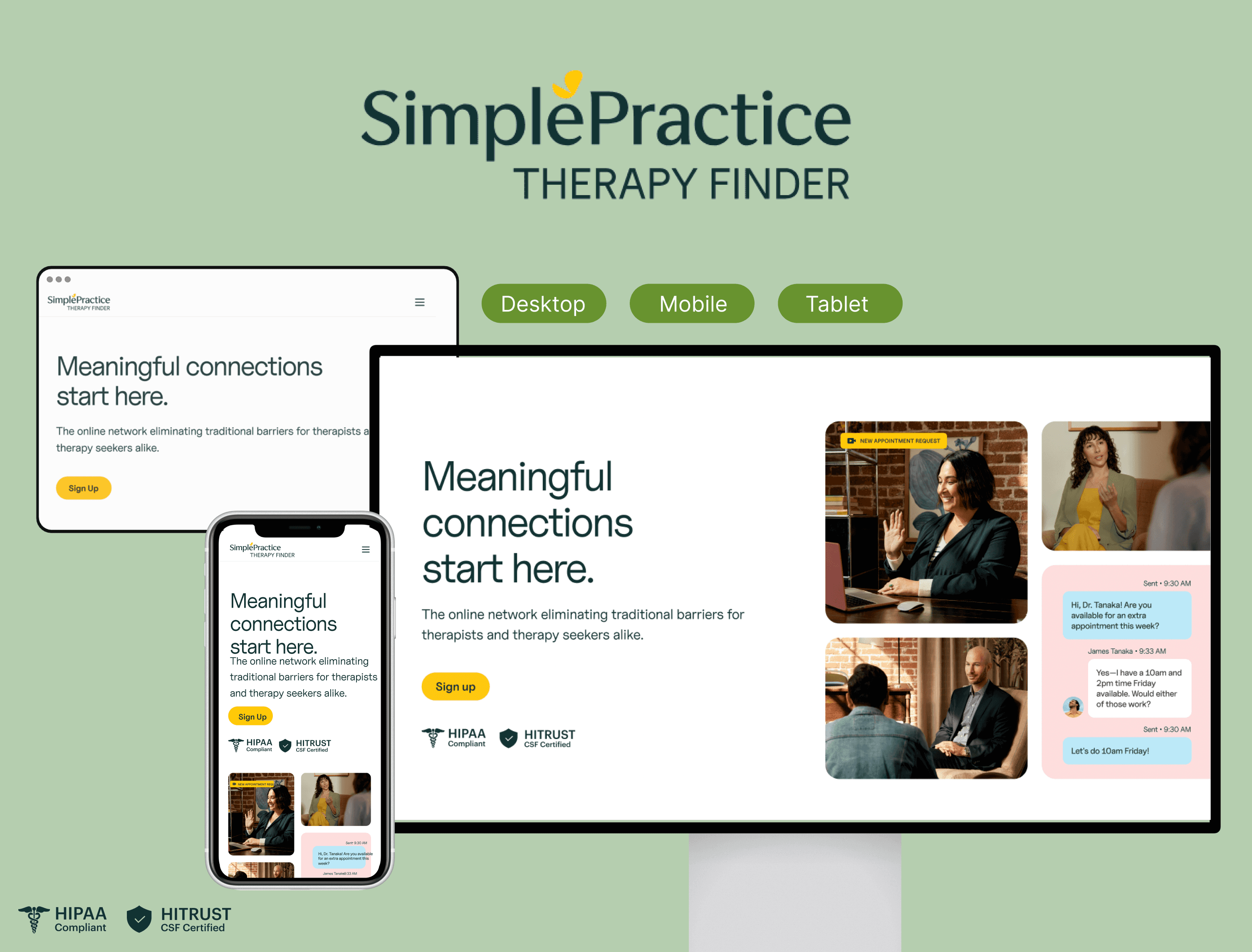
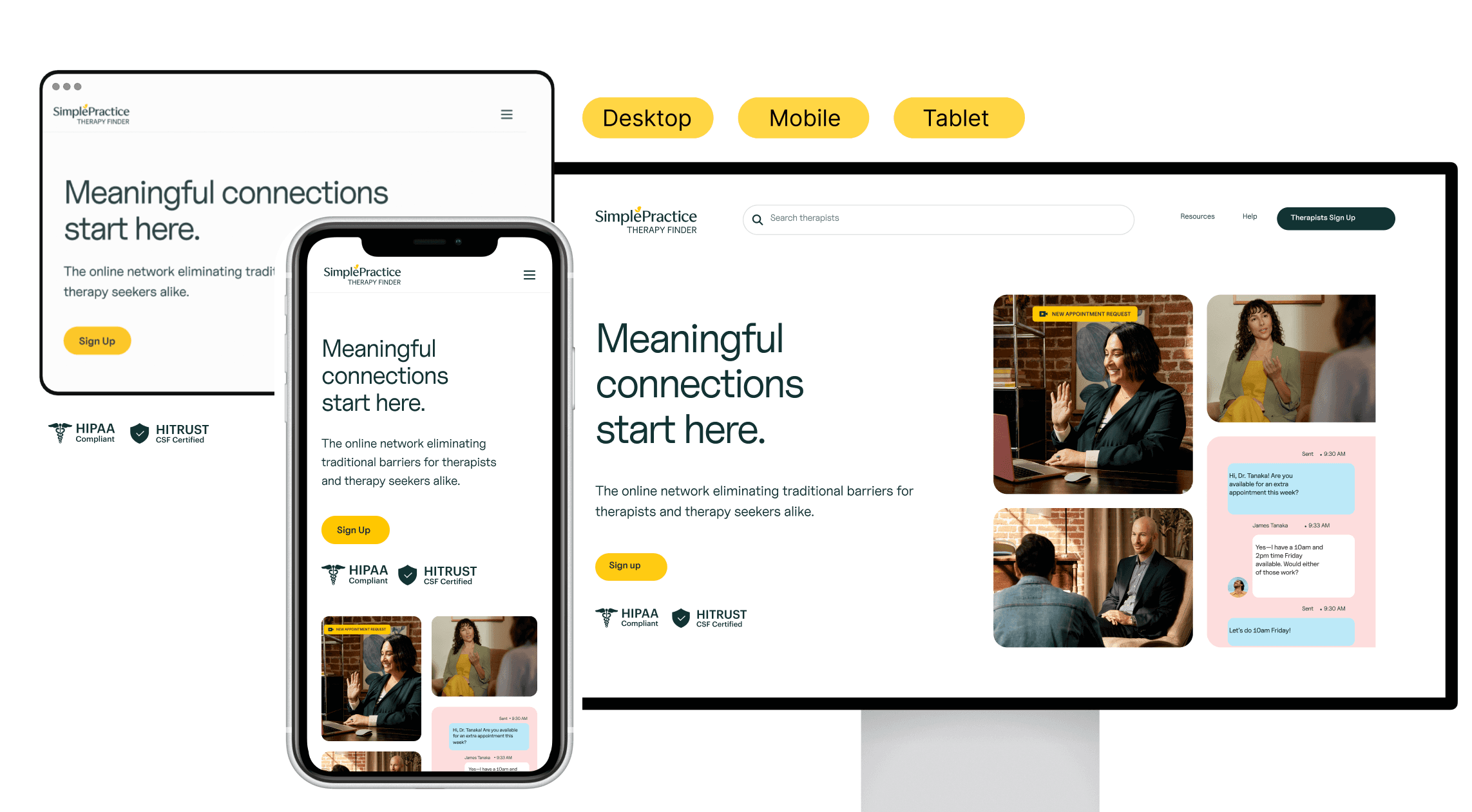
Delivered a comprehensive redesign of Therapy Finder across all platforms, introducing a scalable design system and cohesive visual language that elevated usability and brand alignment.
HealthCare Industry - Practice Management Software
2 months
Product Manger
Senior Designer and Me
Engineering Team - 6 people
Marketing Team
Product Design Intern
Summer Intern and Fall Co-op 2025
what did i do?
Redesigned Therapy Finder with a new design system, improved UX, and cross-platform consistency.
why was it done?
To fix poor clinician visibility, brand inconsistency, and clunky referrals, making it easier to discover and refer therapists.
the impact?
Improvised workflow by introducing design system by 42% and improved scanability for clinicians by 40% after rebranding
what did i learn?
Learned to design for clarity and trust, balancing user needs with business goals under rebrand constraints.
About Therapy Finder:
Therapy Finder is SimplePractice’s online directory that connects therapy seekers with mental health professionals.
16M+ clients
Voted #1 EHR Software of the year
225,000+
Practioners Listed as of 2025
10k+
Directory Visitors per month
how it all began:
When Monarch transitioned into Therapy Finder in June, the shift wasn’t just about changing the name and URL, it was about giving the product a new identity. The challenge lay in redesigning the directory so it felt at home within the SimplePractice brand, while still carrying forward the visual essence of Monarch to maintain continuity and familiarity.
so then we decided to rebrand it entirely…
refreshing the UI with cohesive colors, updated typography, and simplified layouts. The goal was to create a seamless experience that looked and felt like SimplePractice, while ensuring clinicians and clients could still recognize the product they were already familiar with.
uncovering the problems:
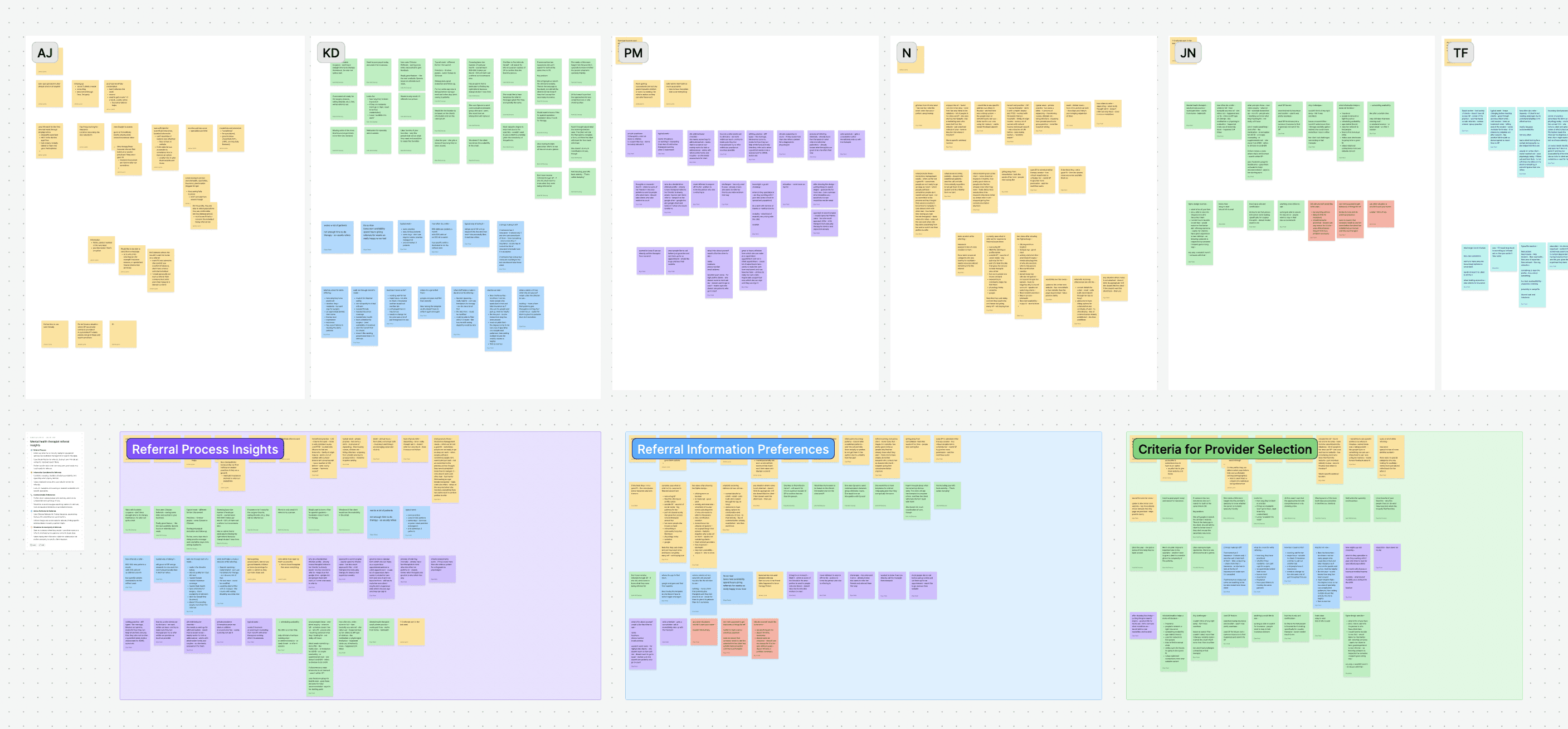
We conducted 15 user interviews and ss I dug deeper into the user experience, the cracks became clear. Clinicians struggled because the most important details like availability, insurance, and areas of specializations were hidden away.
Referral workflows felt unnecessarily complicated, slowing down the very process meant to connect people faster. And for clients, the profiles often lacked the kind of trust signals that inspire confidence when choosing a therapist.
To top it off, the brand itself felt fragmented, awkwardly positioned between Monarch and SimplePractice.
My work in a nutshell:
Rebranding of Therapy Finder
Delivered a comprehensive redesign of Therapy Finder across all platforms, introducing a scalable design system and cohesive visual language that elevated usability and brand alignment.
Design System for Therapy Finder.
Created a Design System for Therapy Finder.
UX improvements
Improved UX for the Clinician Referral System via the Profile page - mainly used for referrals by clinician to drive incremental revenue through increased appointment volume.
Today's case study we will mainly talk about the Improvement of the UX behind the Profile page used for referrals by Clinician when referring out an existing/new/potential client to other clinicians
Summary
Company Objective
Help customers build ideal caseloads
Company Key Result
Generate 920K referrals
Problem Statement :
Lack of optimization
Delivered a comprehensive redesign of Therapy Finder across all platforms, introducing a scalable design system and cohesive visual language that elevated usability and brand alignment.
Lack of inconsistency
across products
Created a Design System for Therapy Finder.
Lack of profile visibility
Improved UX for the Clinician Referral System via the Profile page - mainly used for referrals by clinician to drive incremental revenue through increased appointment volume.
Lack of traffic on website
Lack of traffic on the client facing portal Therapy Finder is a blocker for clinician adoption.
Why are we solving the problem?
Enhanced clinician visibility within the Therapy Finder to simplify client referrals on the internal portal and make it easier for new customers to discover the right clinician.
Who are we solving the problem for?

Business Impact:
Increase directory traffic by 5k-10k per month by the end of Q3, improving visibility for clinicians and improving the clinician refferral system.
Generate 8k - 8.8k additional client referrals through the directory.
Boost organic rankings for core therapy-related search terms, enhancing our long-term referral acquisition strategy.
User Research - Interviews (15)
We sent a screening test and gathered clients and mix of clinicians, who we interviewed and asked them about their practice and what are the key information they would need to see about other clinicians when they are referring out their patients and asked clients what would they typically want to know while finding a new clinician. Since the internal referring portal and the website had to be a close match of each other.
Interviewed : 15 customers
Mode of Interview : Online Zoom Meet
Some interview data:
Key Information from interviews:
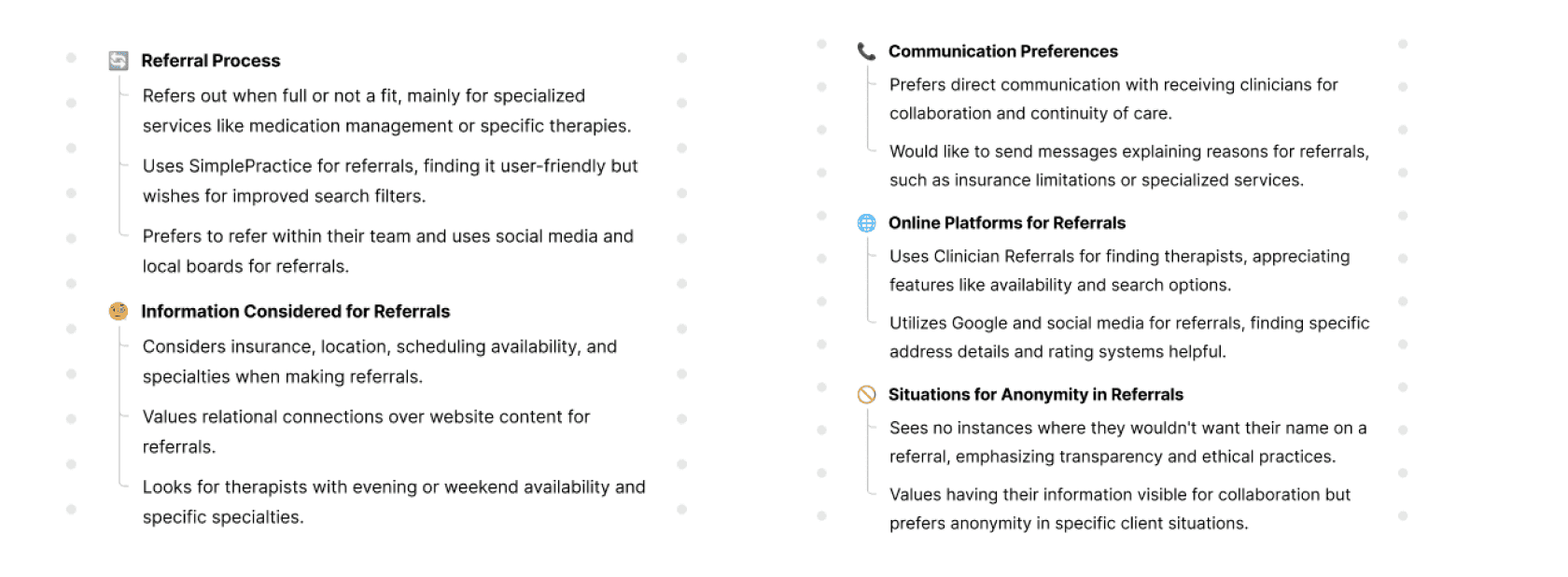
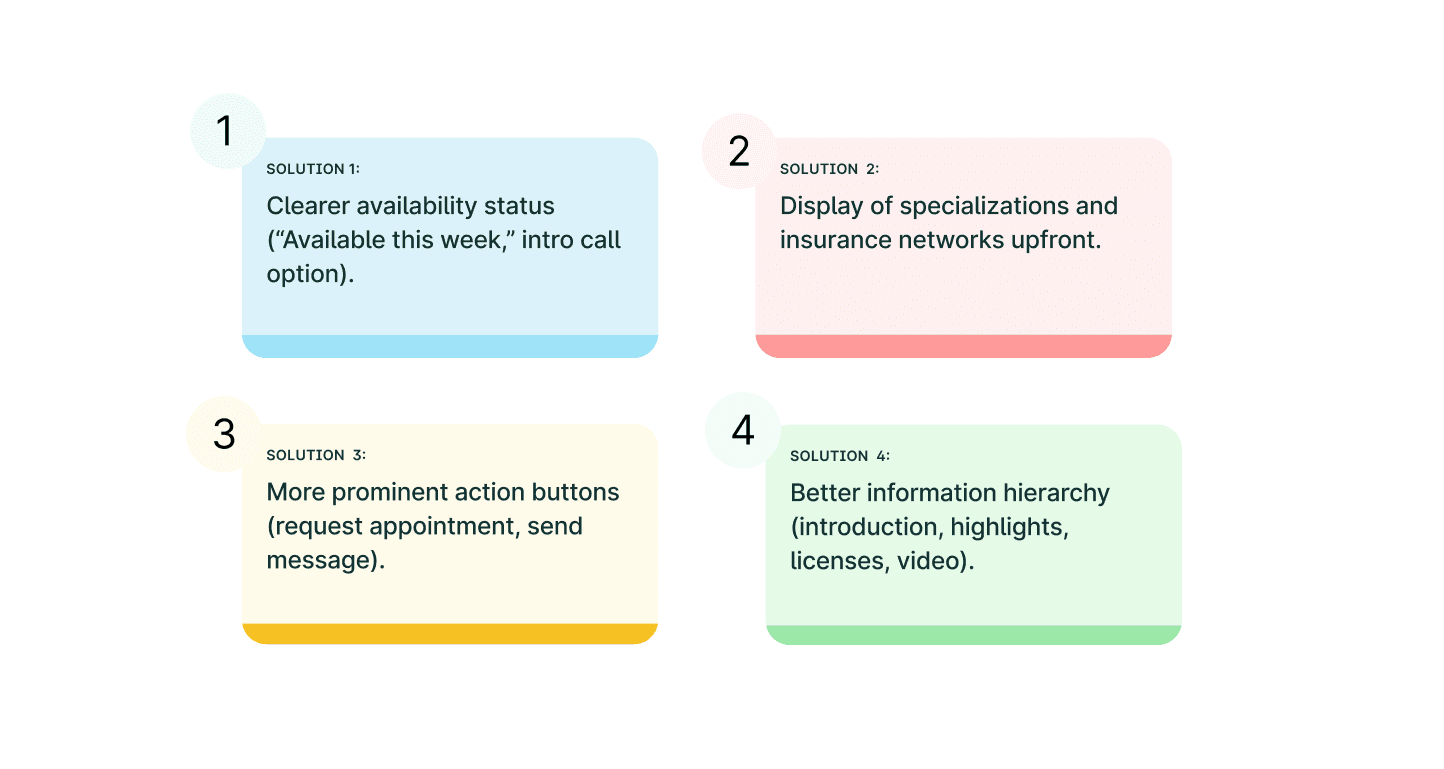
4 key changes we considered to include in the redesign to improve the clinician referral system
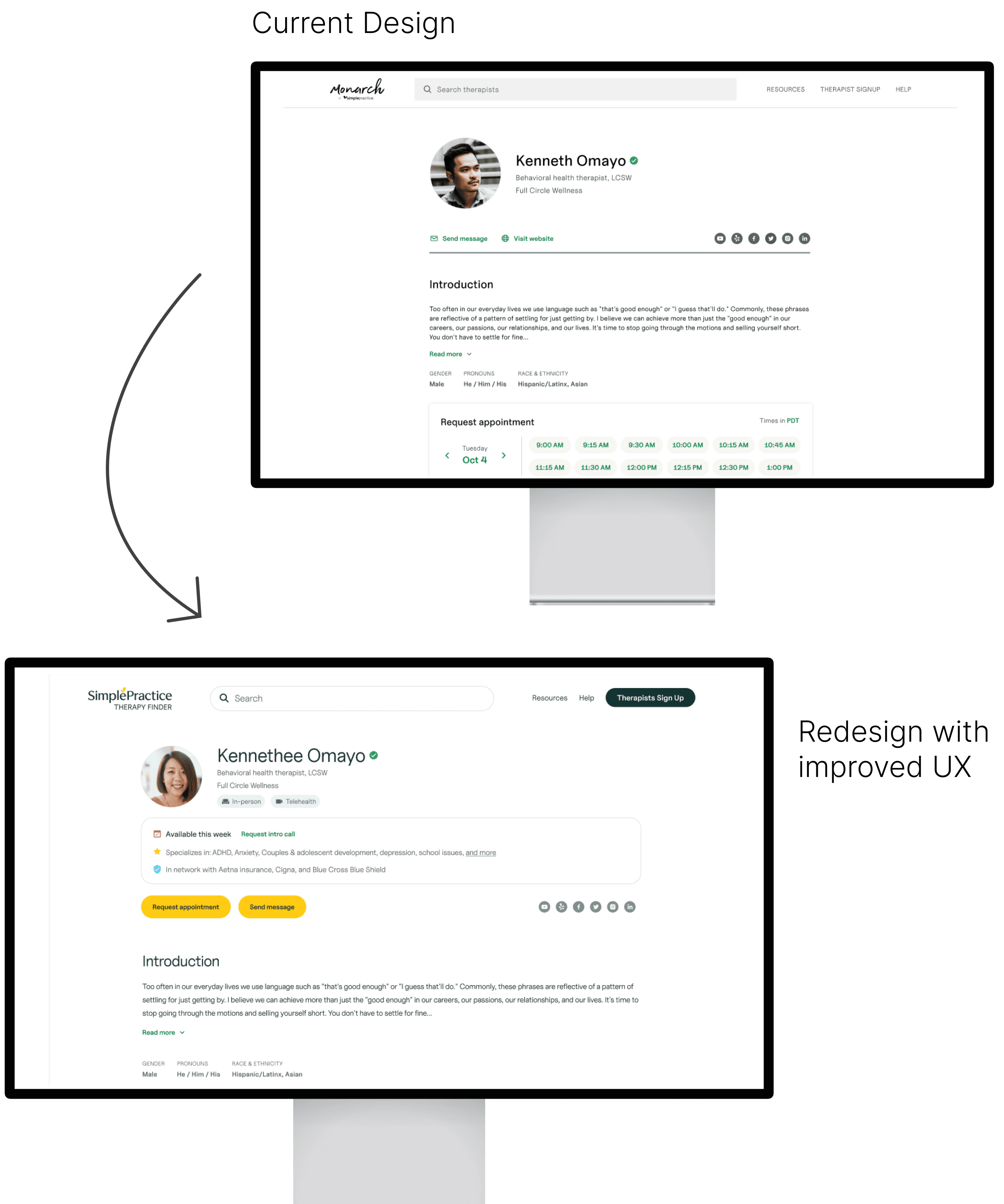
Current Design
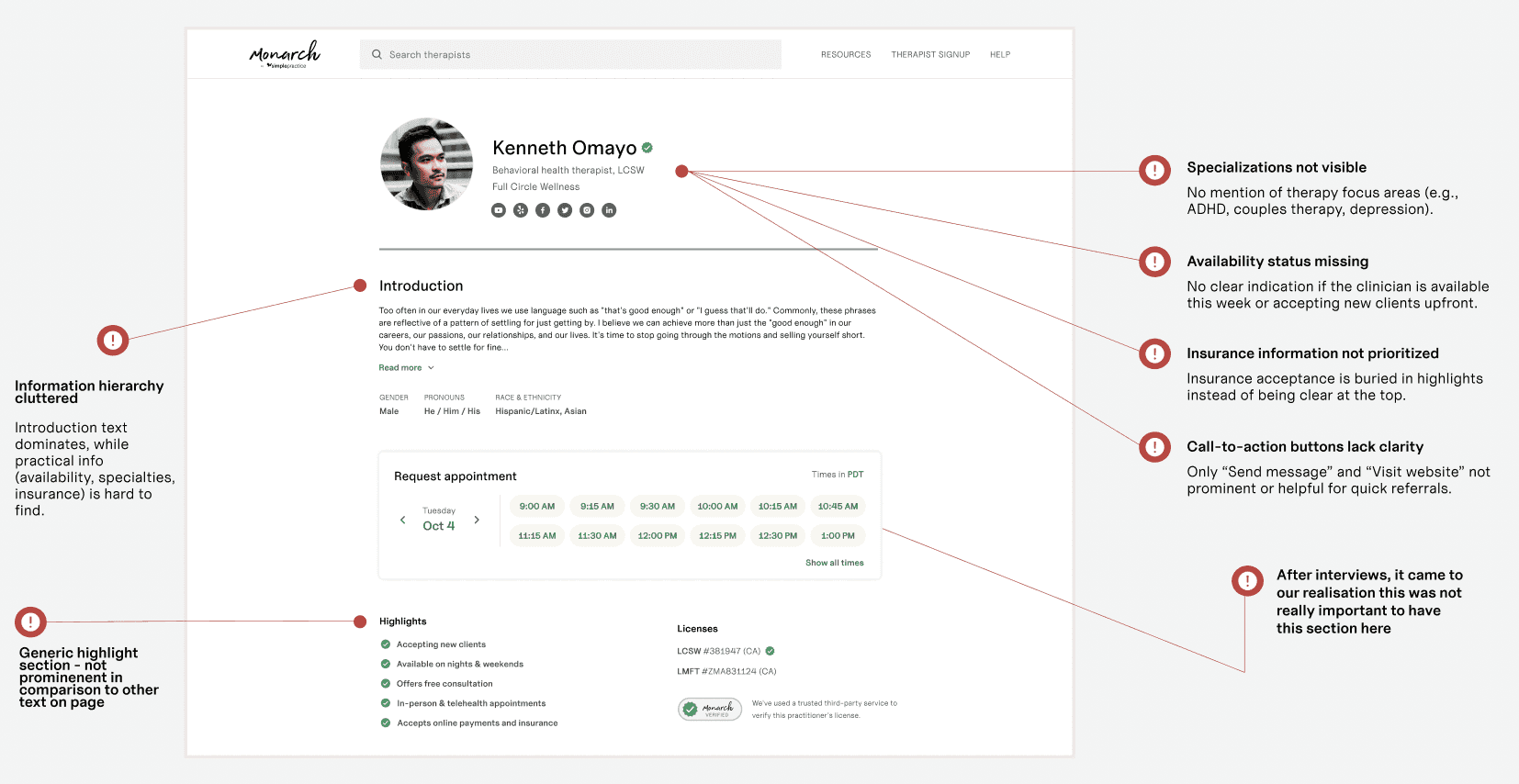
List of issues with the current (before) design:
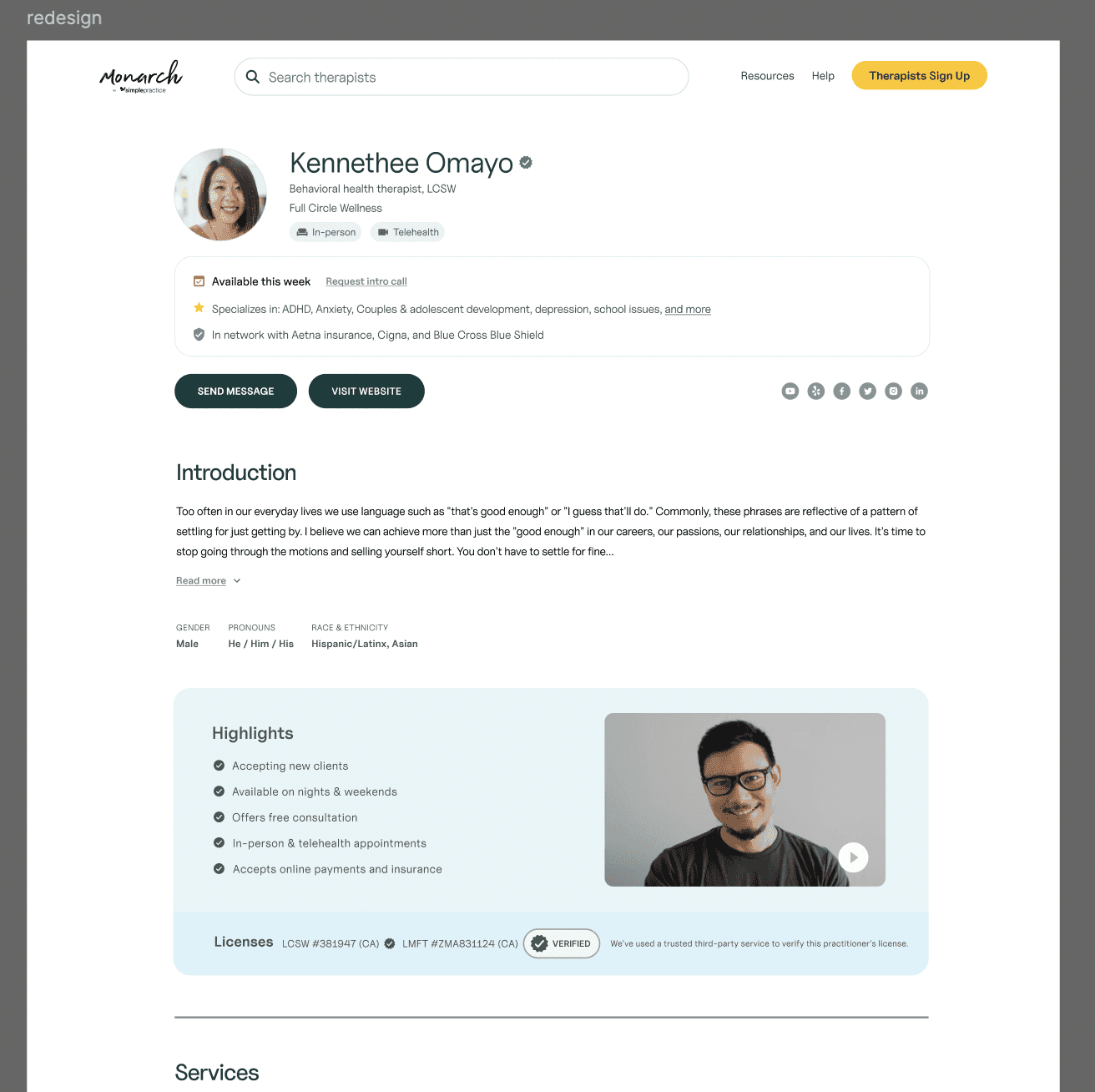
No clear visibility of therapist availability or whether they are accepting new clients.
Specialisations and focus areas are missing, making it hard to assess fit.
Insurance information is buried in highlights instead of being upfront.
Call-to-action buttons (send message, visit website) are weak and not referral-friendly.
Information hierarchy is unbalanced like long intro text overshadows practical details.
No quick trust signals (mutual connections, recommendations) to support referral confidence.
Overall design feels less aligned with SimplePractice brand and lacks cohesive UX.
Made a whole lot of design changes and explorations then…
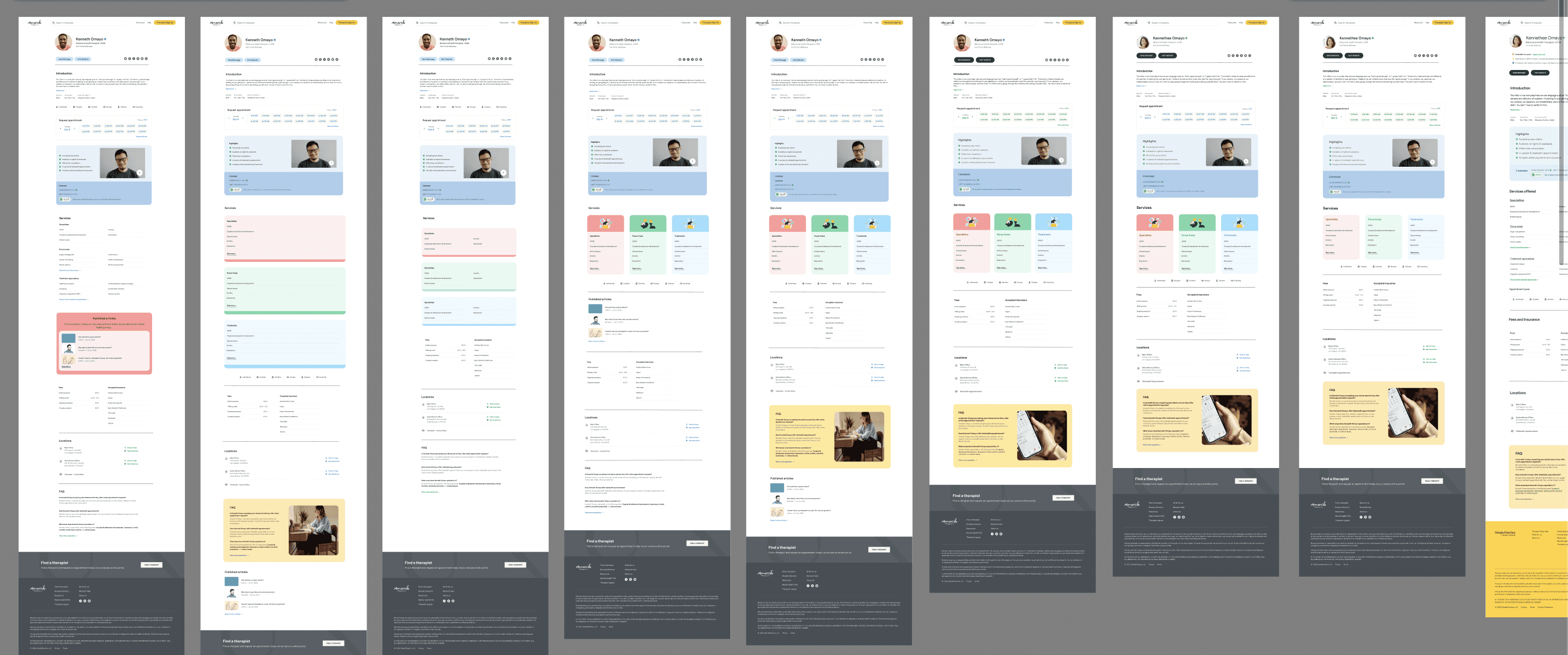
Made a whole lot of design changes and explorations then redesigned the profile page
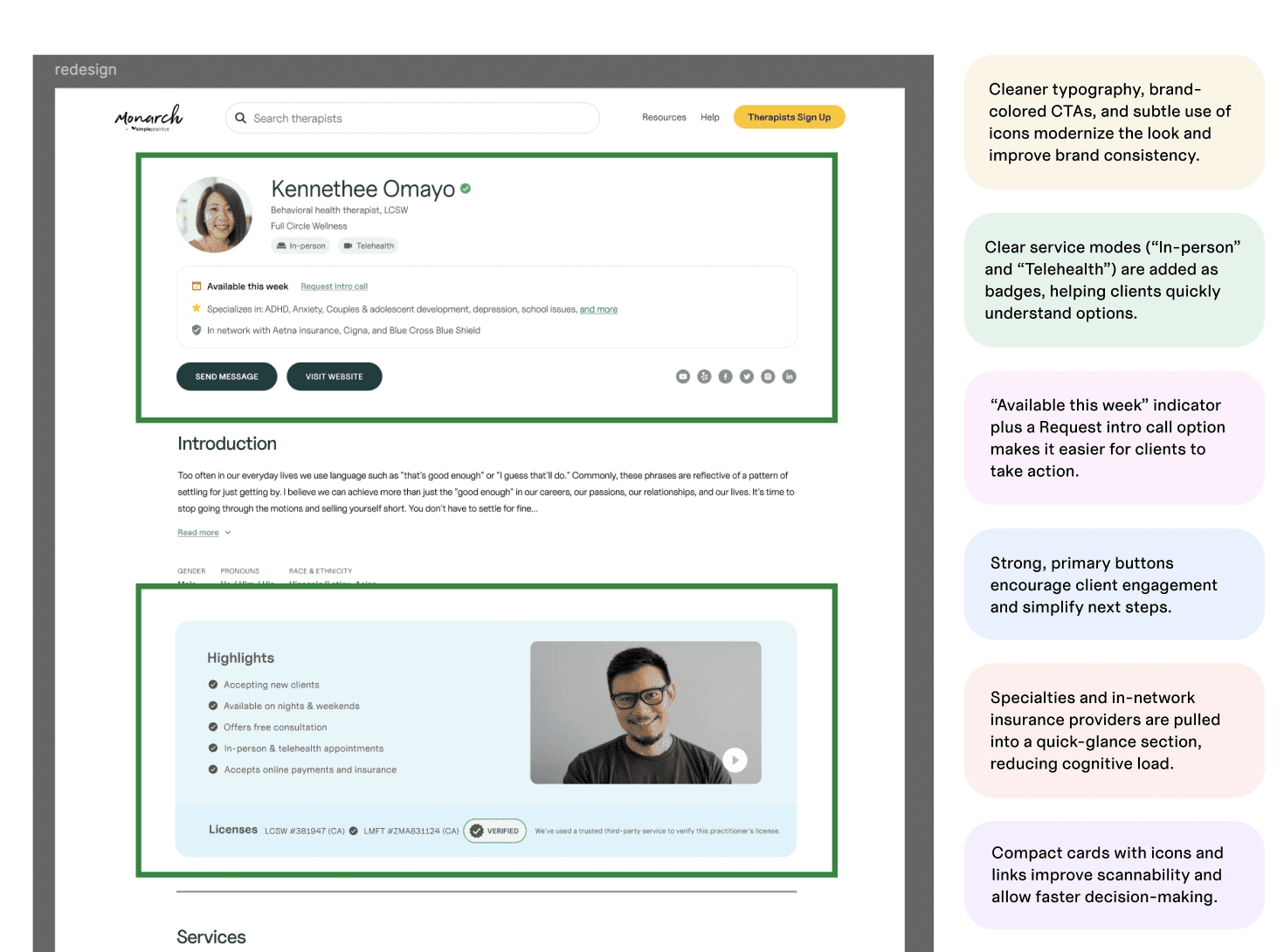
Final Design
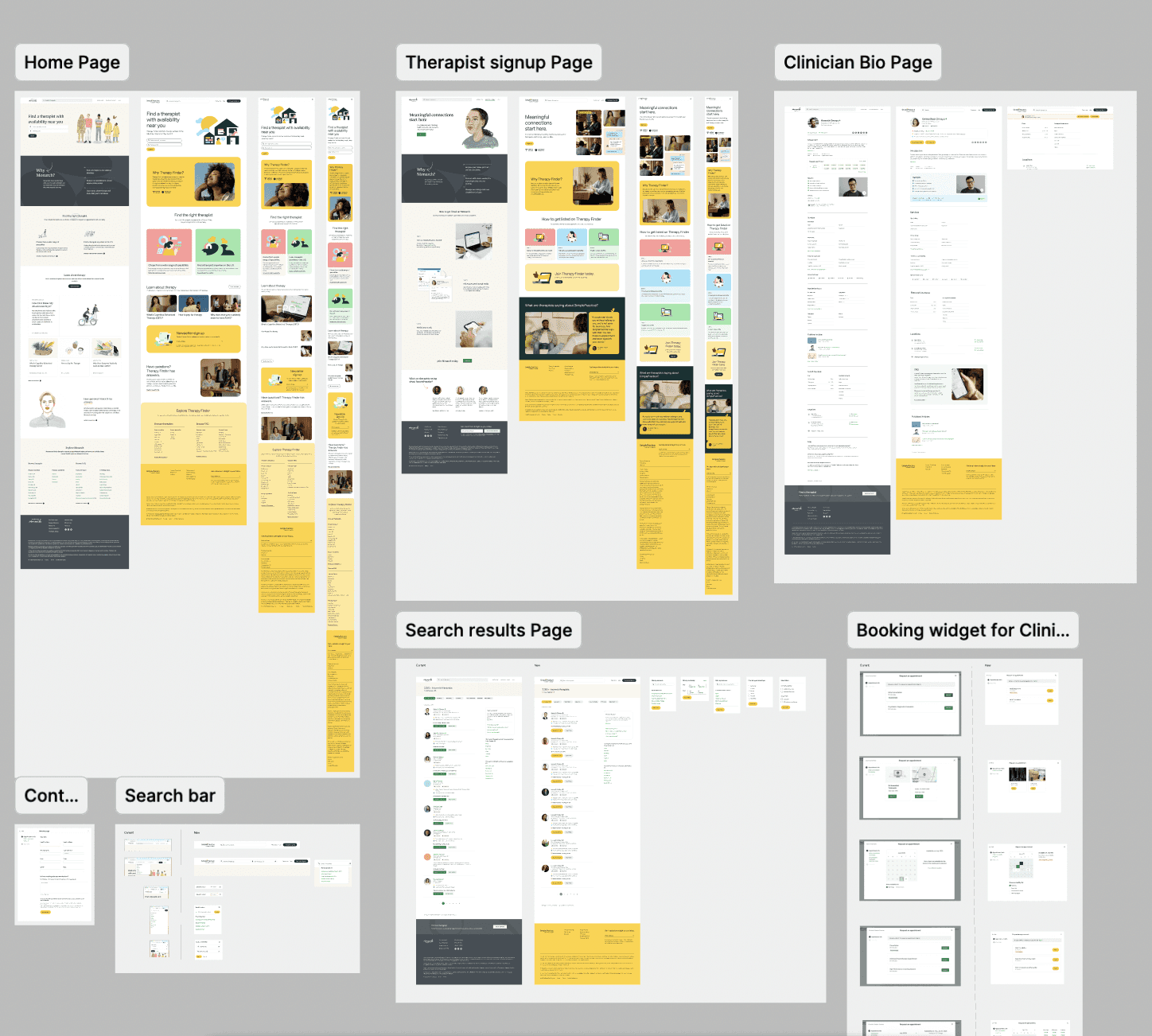
We also worked on redesigning all these pages:
In a nutshell, my work included:
Rebranding of Therapy Finder
Delivered a comprehensive redesign of Therapy Finder across all platforms, introducing a scalable design system and cohesive visual language that elevated usability and brand alignment.
UX improvements
Improved UX for the Clinician Referral System via the Profile page - mainly used for referrals by clinician to drive incremental revenue through increased appointment volume.
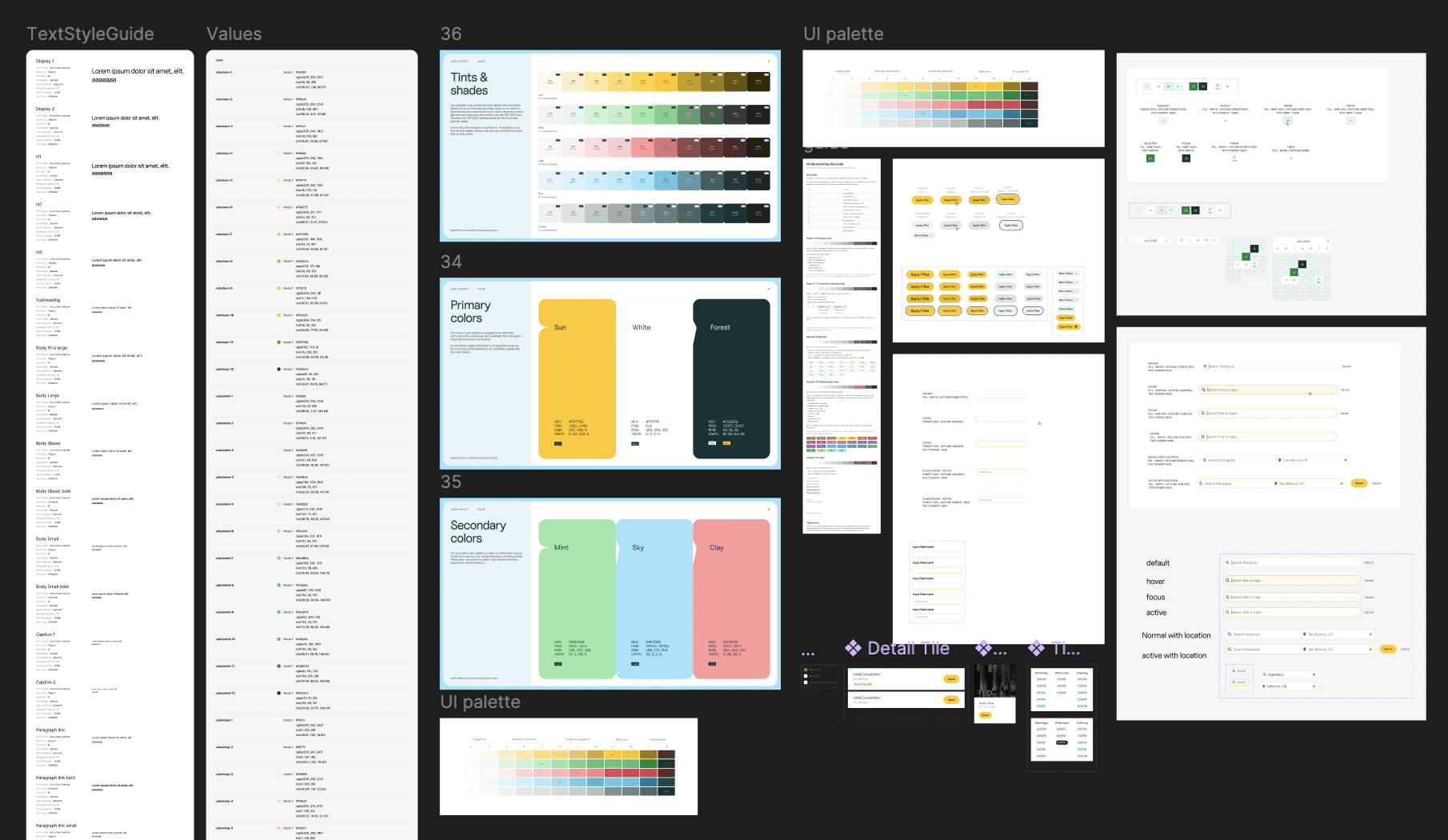
Design System
Designed the entire Design System for Therapy Finder
Currently handed off for development to engineering team.
Working on the Monarch redesign taught me how much small details can shape trust and usability. I realized that users don’t want to dig through long bios, they just need quick signals like availability, specializations, or whether their insurance is accepted. Learning to surface those details upfront helped me think more about designing for clarity and reducing cognitive load.
I also saw how rebranding is more than just swapping colors or logos; it’s about creating a more human and trustworthy experience. This project pushed me to balance business goals with real user needs, and it reminded me that thoughtful, simple design choices can make a big difference in how people connect with care.
Let's Chat.
Last Updated Jan 2026
Quick Links
Diya Patel
Made by
Open for Full time Opportunities/ Contract Positions