Spendwise -
AI Budget Tracking App
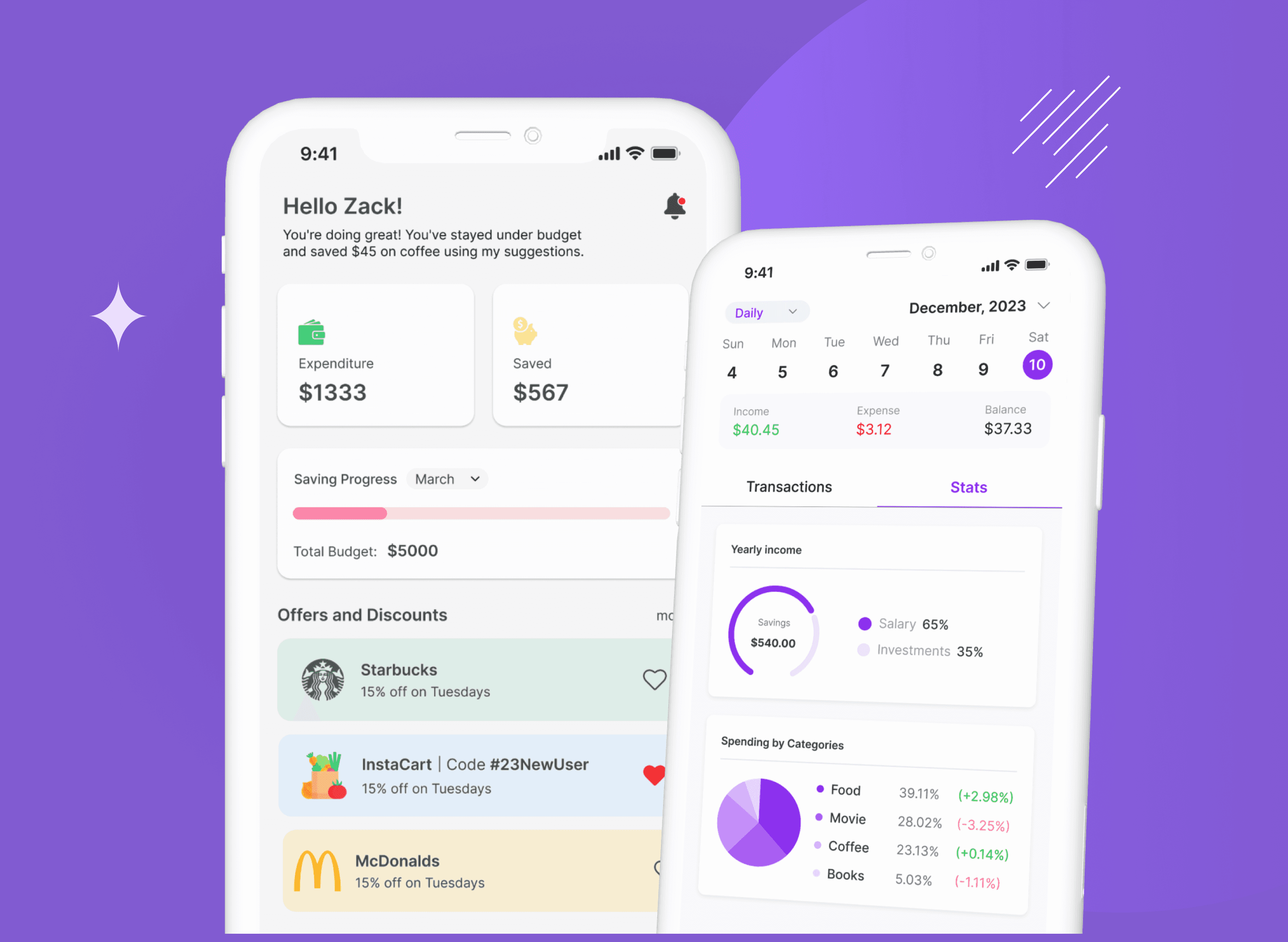
Let’s meet Zacky! (Zacky is me and I am Zacky 🥲)
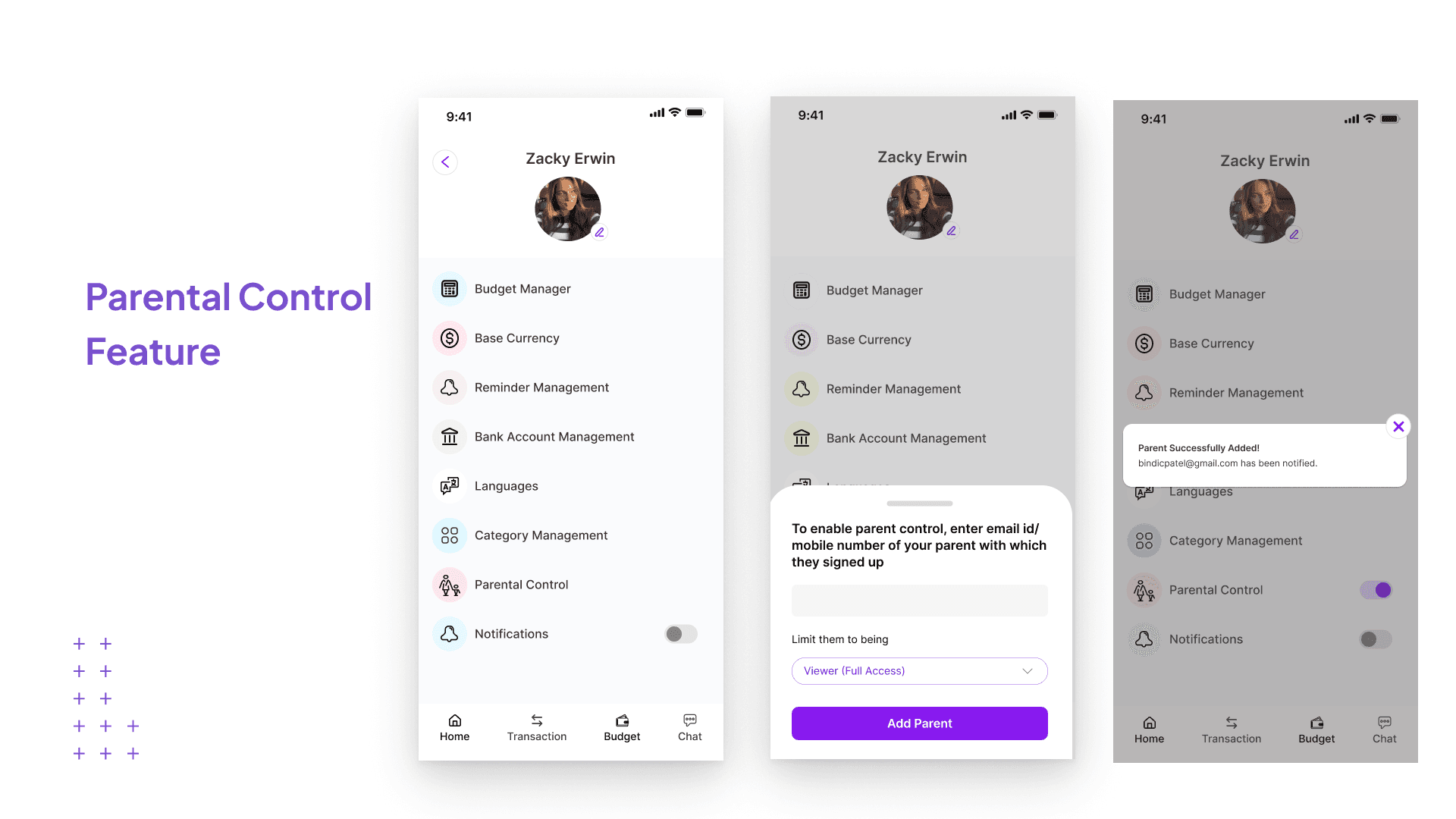
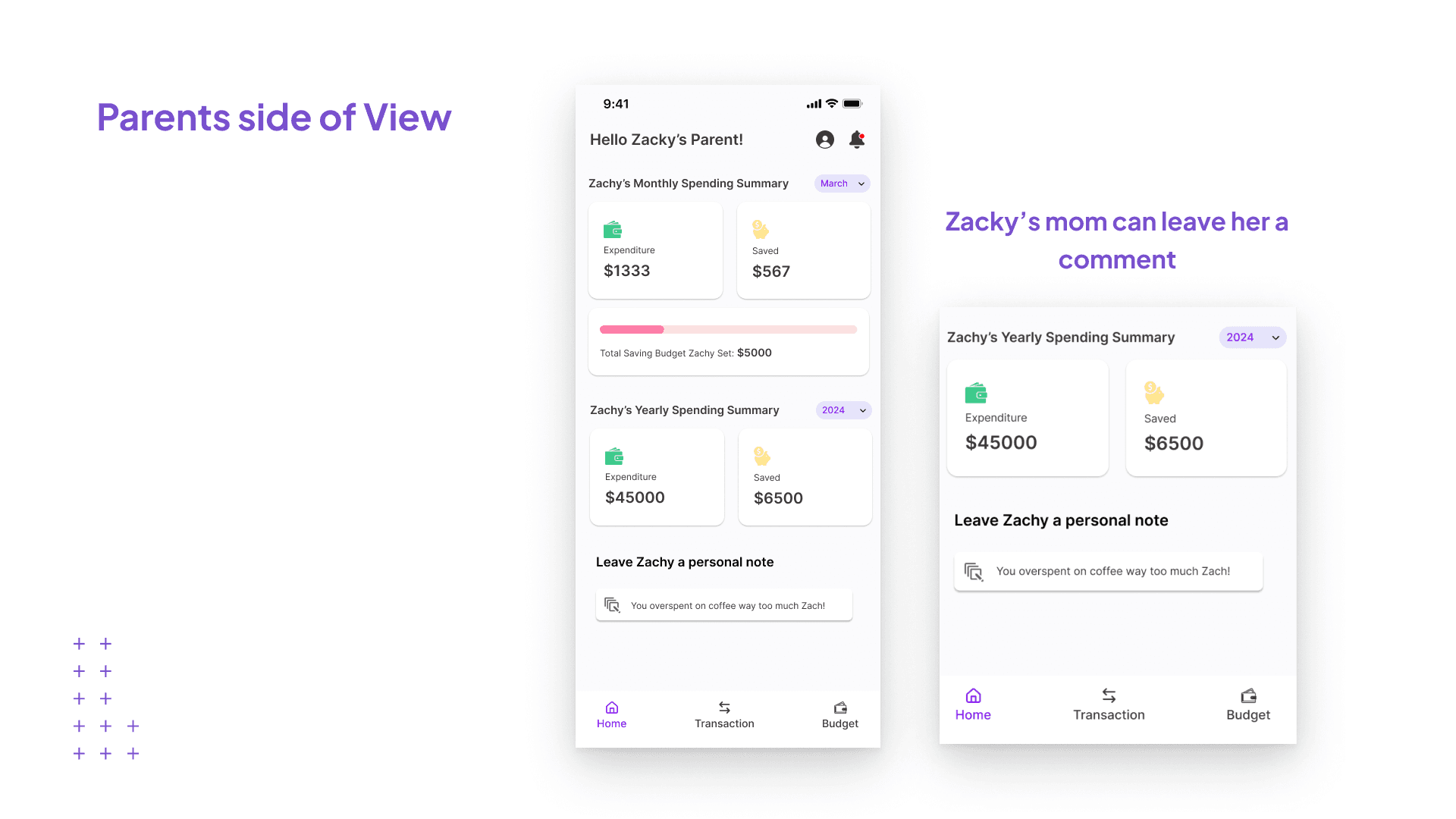
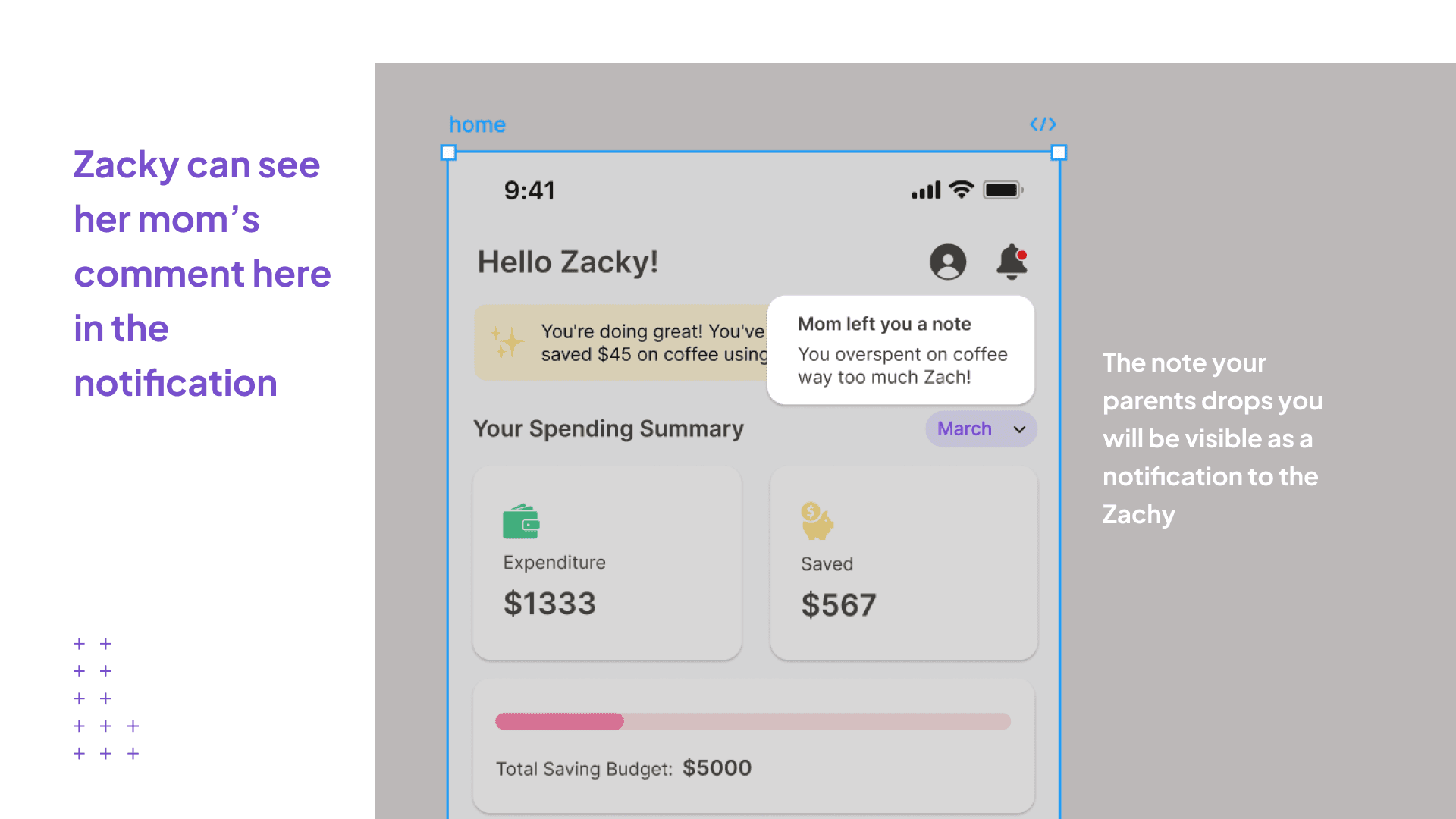
Zacky is a sophomore struggling to manage her expenses while living away from home. Her parents are concerned about her spending habits and want more transparency in how she uses her money.
• She usually deals with
• forgetting to add expense in her app
• overspending somewhere and not keeping a check
• struggles to find good deals and coupons
• would love to have someone help her make informed choices about spending
• re-reminding her to keep a check on her budget
• would love personalised recommendations on deals near campus
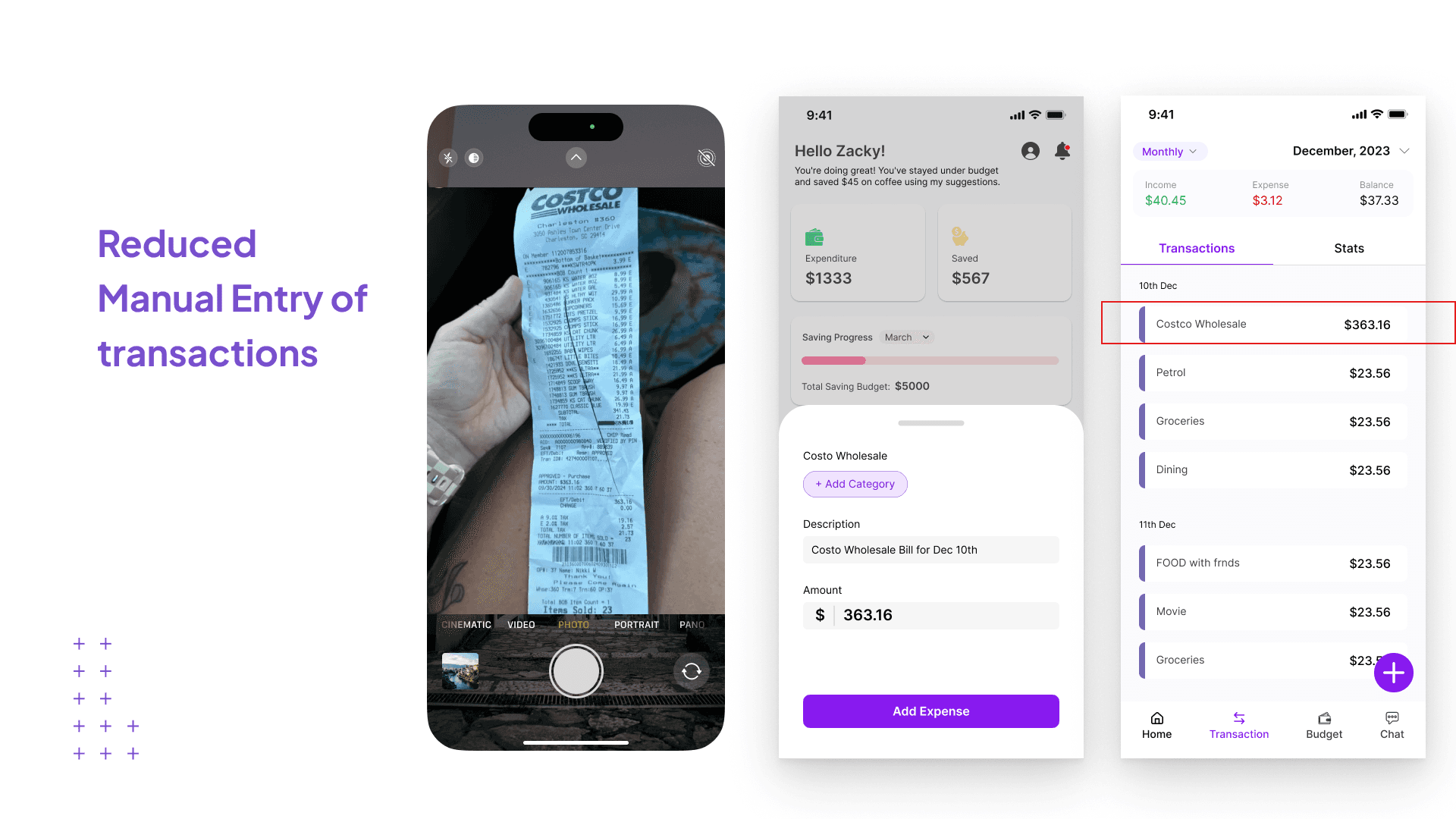
• hates manually entering each expense in the app she uses to track budget
The problem statement
College students struggle to manage their finances effectively while balancing independence and parental oversight. Currently:
• 71% of students worry about their monthly expenses
• 65% exceed their monthly budgets regularly
• 83% wish they had better spending insights
• 58% want to maintain privacy while sharing financial updates with parents
• 77% miss out on student discounts and deals around campus
Executive Summary
SpendWise was conceived as a response to the growing need for intuitive personal finance management tools among millennials and Gen Z users. The project aimed to create a mobile application that simplifies expense tracking, budgeting, and financial goal-setting while providing AI-powered insights and personalized financial guidance through an intelligent chatbot assistant.
Initial Concepting
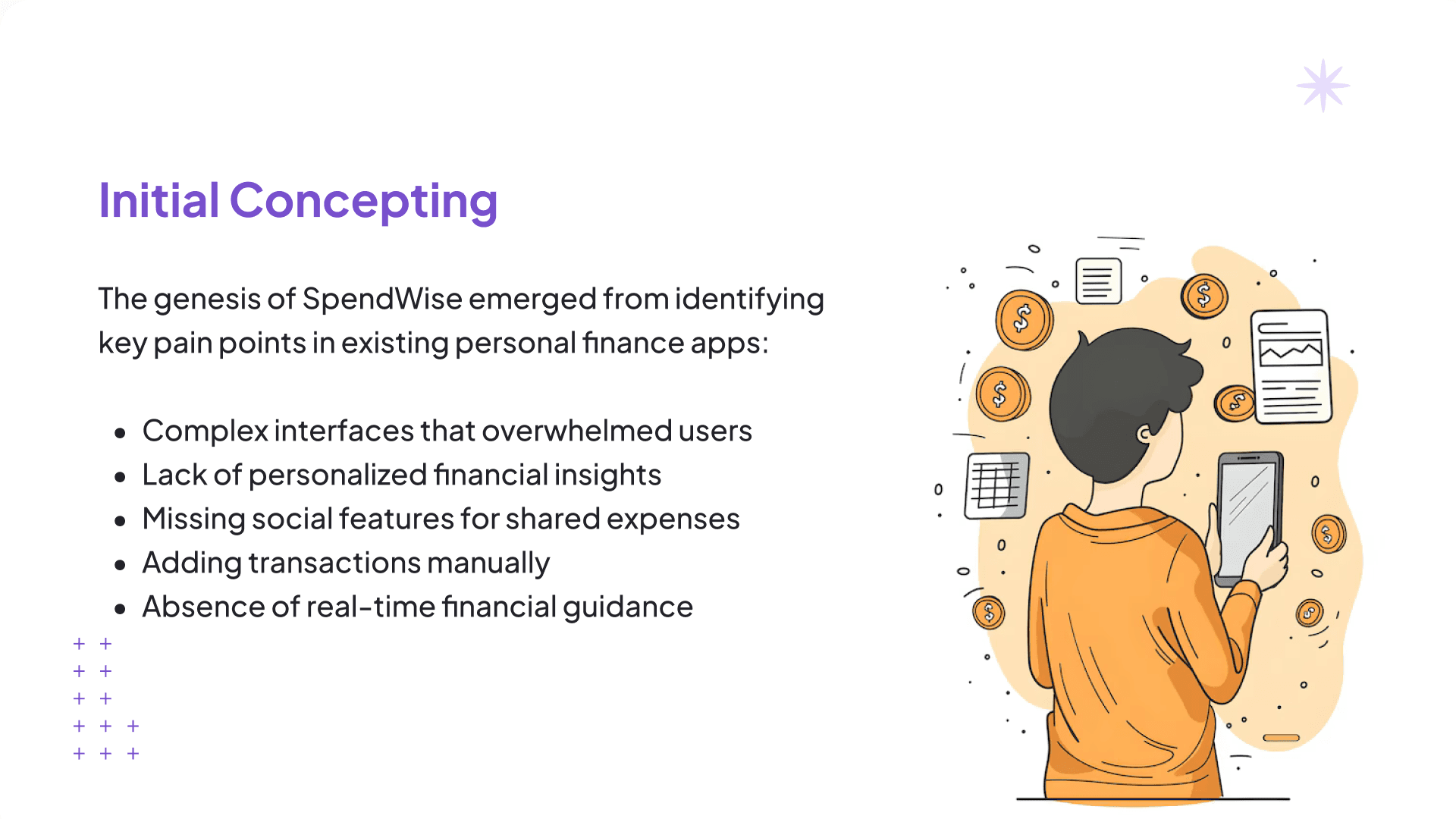
The genesis of SpendWise emerged from identifying
key pain points in existing personal finance apps:
• Complex interfaces that overwhelmed users
• Lack of personalized financial insights
• Missing social features for shared expenses
• Adding transactions manually
• Absence of real-time financial guidance
What does spendwise bring to the table?
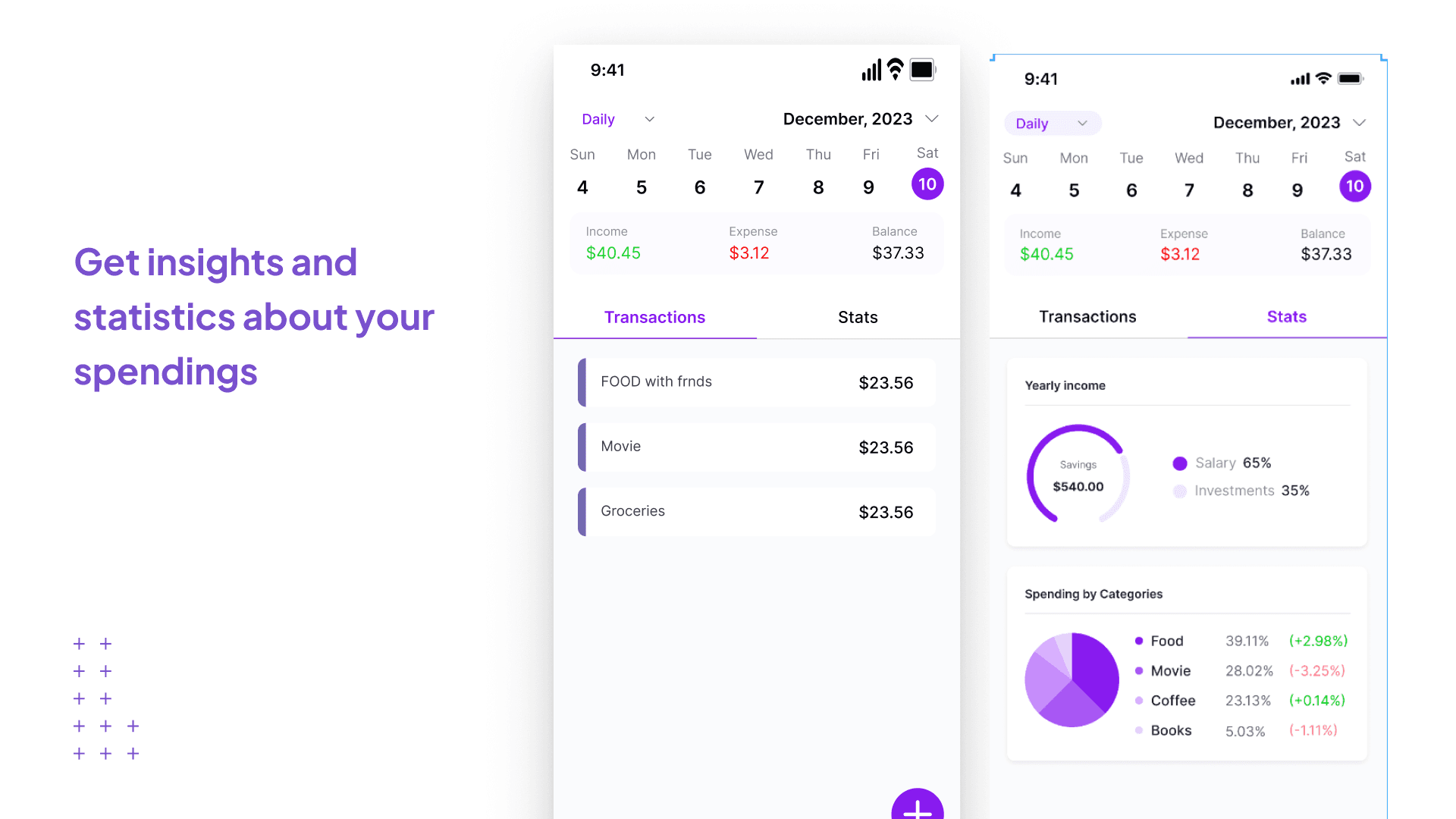
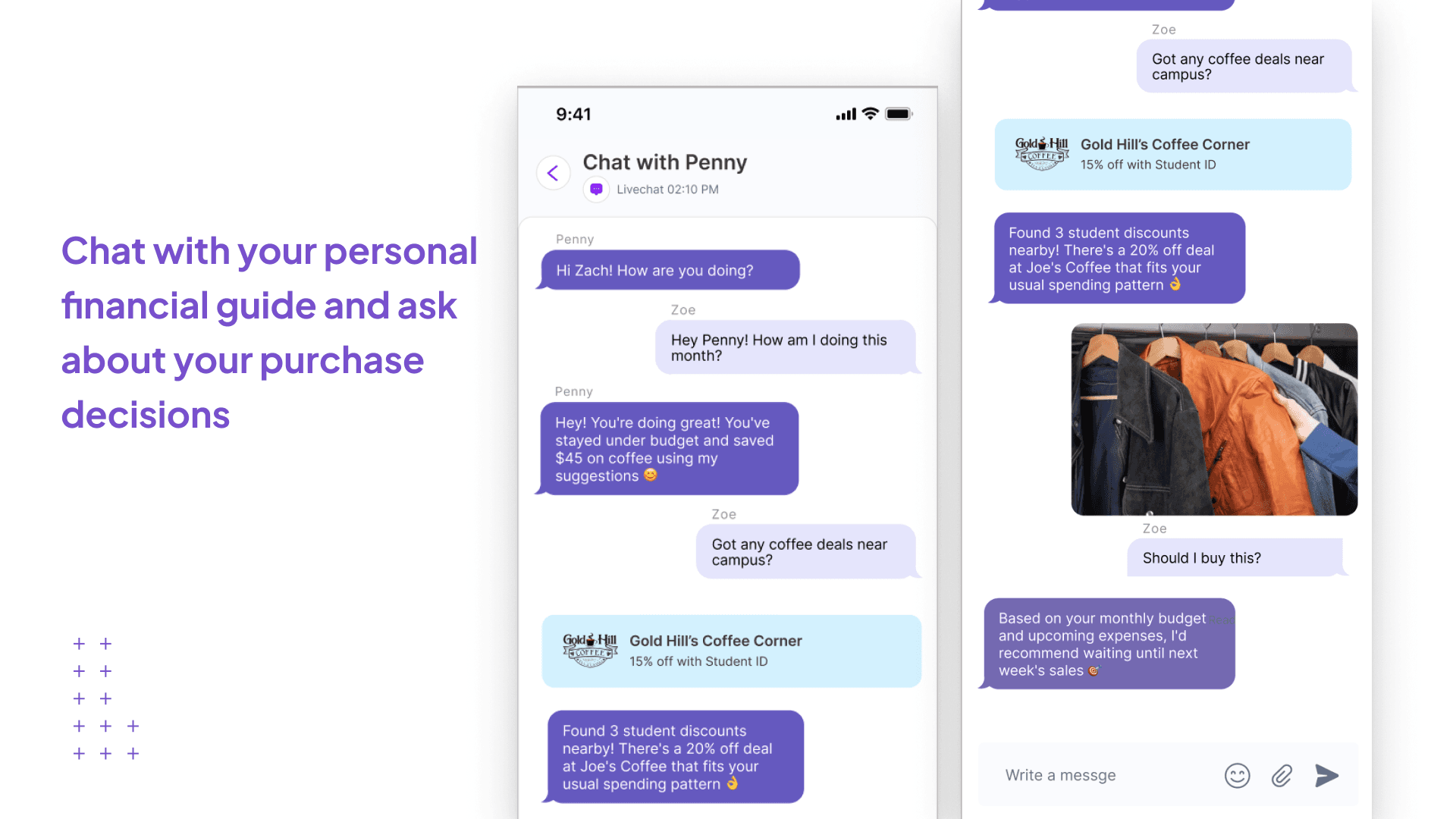
SpendWise was conceived as a response to the growing need for intuitive personal finance management tools among millennials and Gen Z users. The project aimed to create a mobile application that simplifies expense tracking, budgeting, and financial goal-setting while providing AI-powered insights and personalized financial guidance through an intelligent chatbot assistant.
Market Research
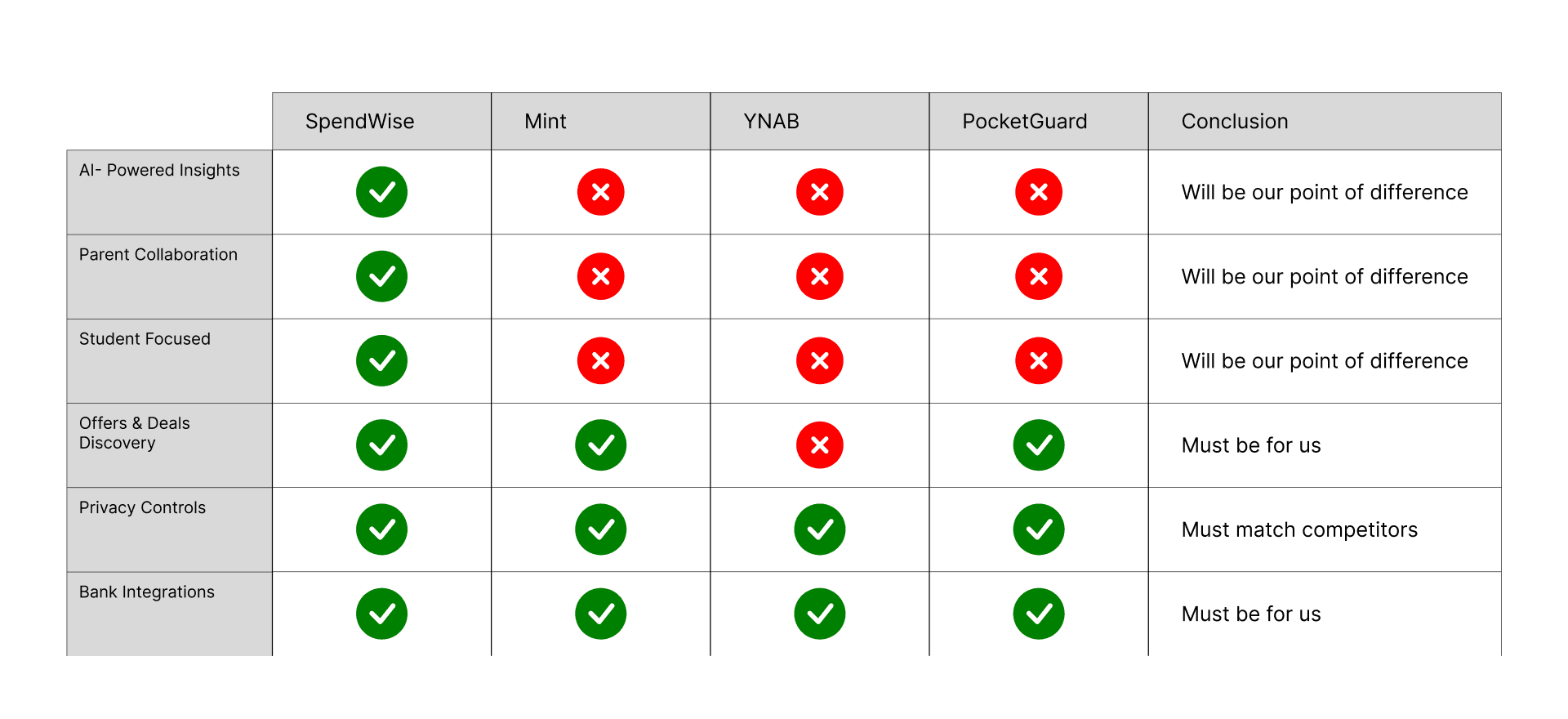
Stakeholder Research
Identifying Stakeholder Needs:
• Primary Stakeholders: Individual users, parents, and families looking for financial management solutions.
• Secondary Stakeholders: Educators and financial advisors who may use the app to teach budgeting and financial literacy.
• Business Stakeholders: Potential partners like banks, fintech companies, and financial literacy organizations interested in integrating their services with the app.
User Research
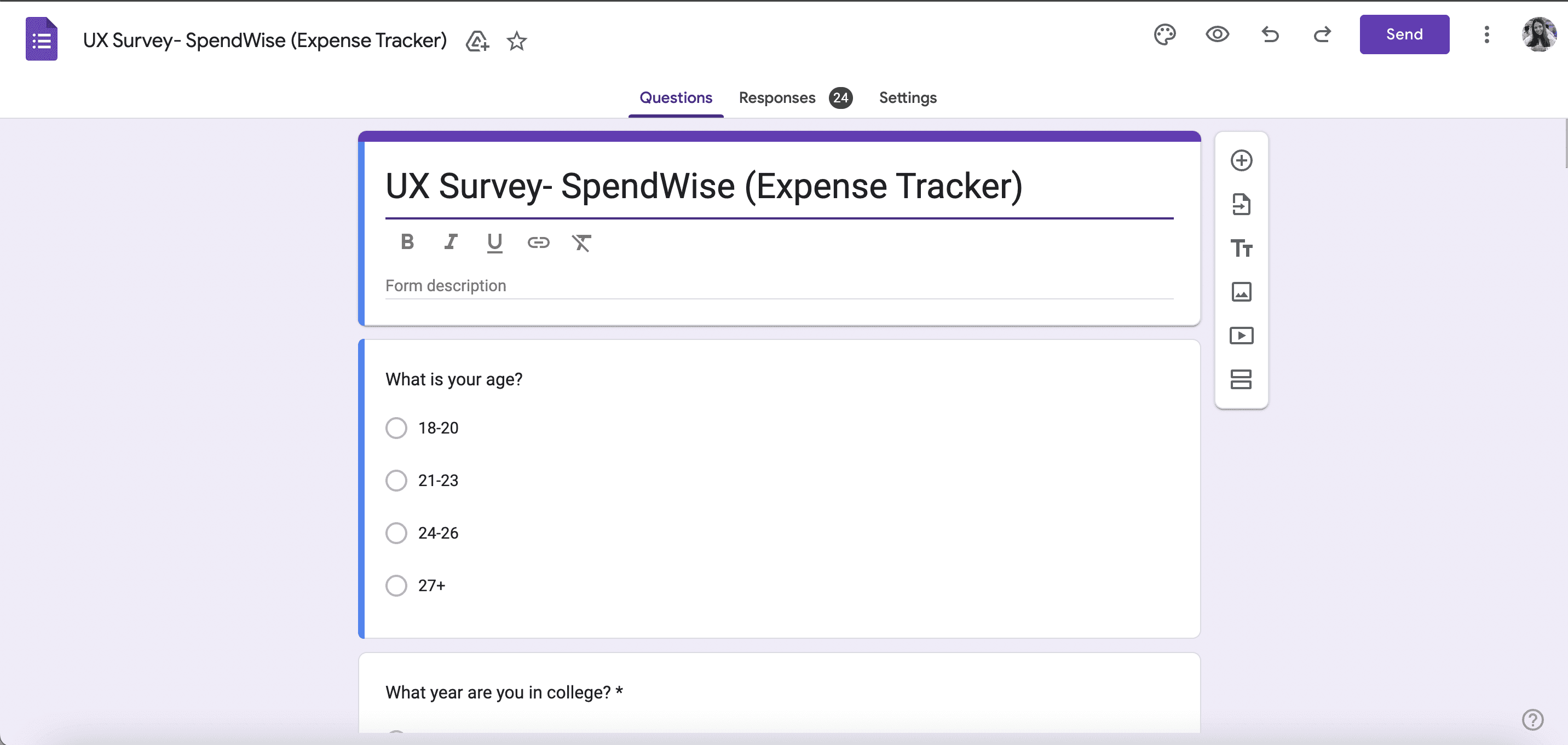
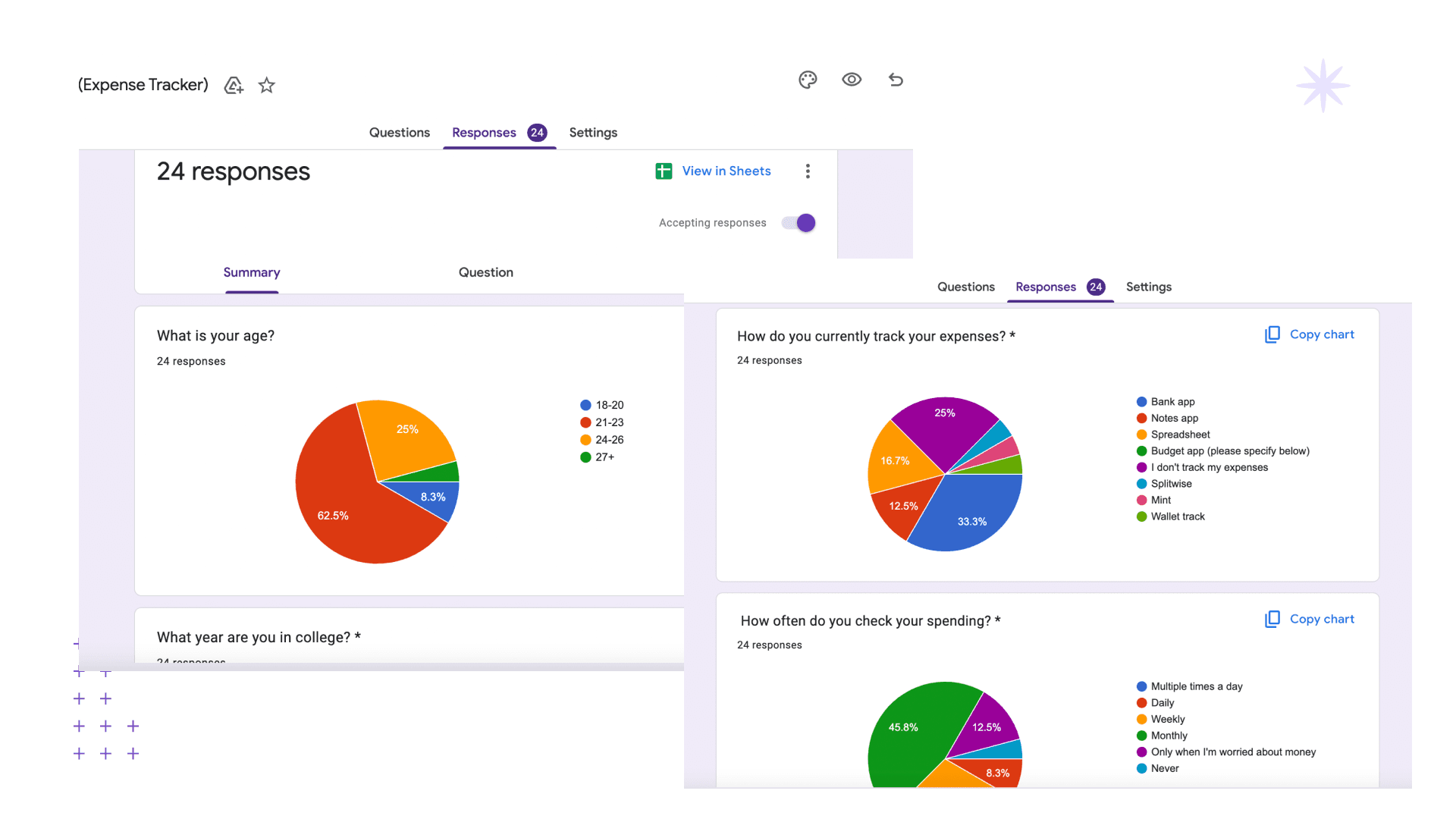
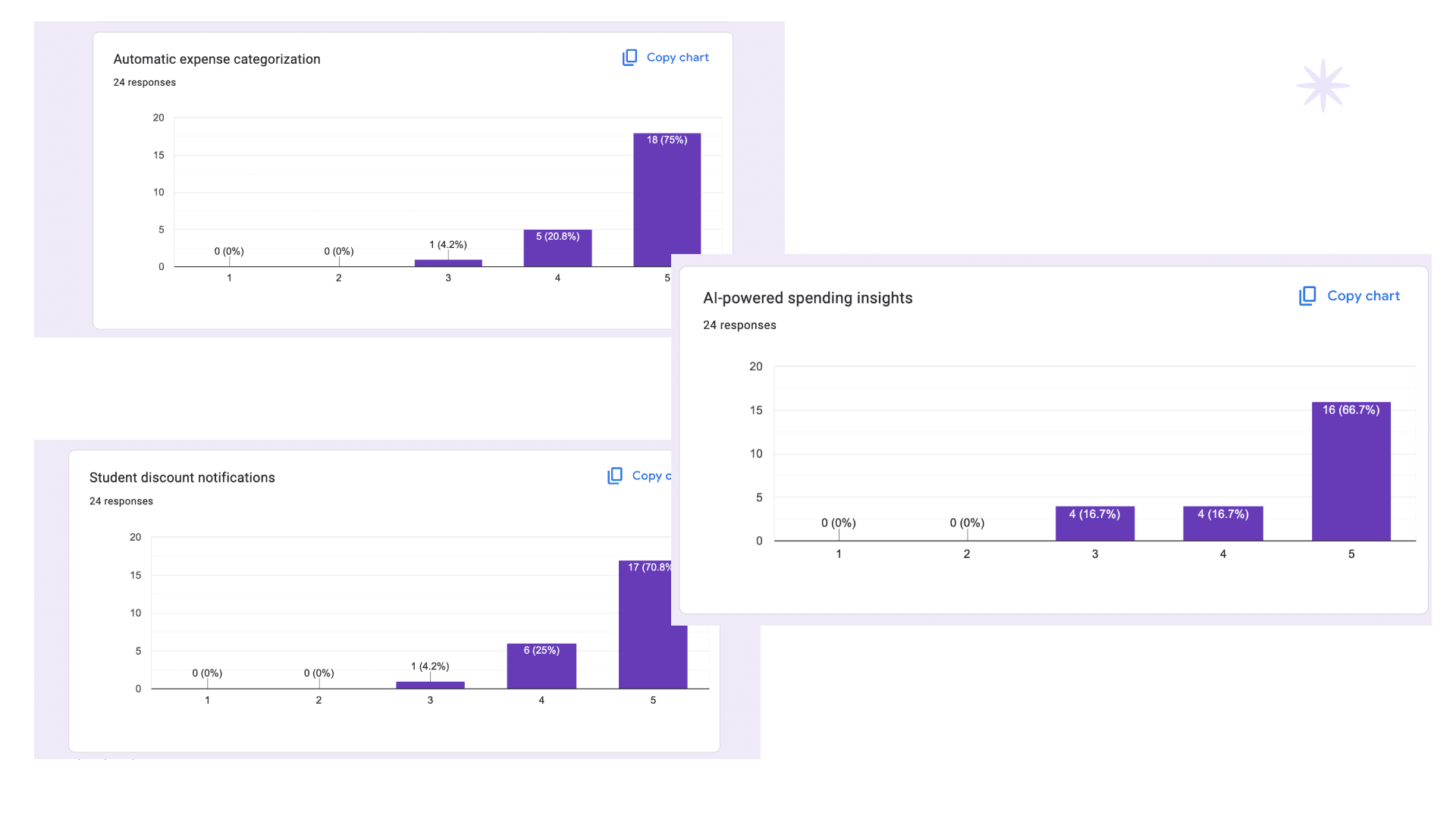
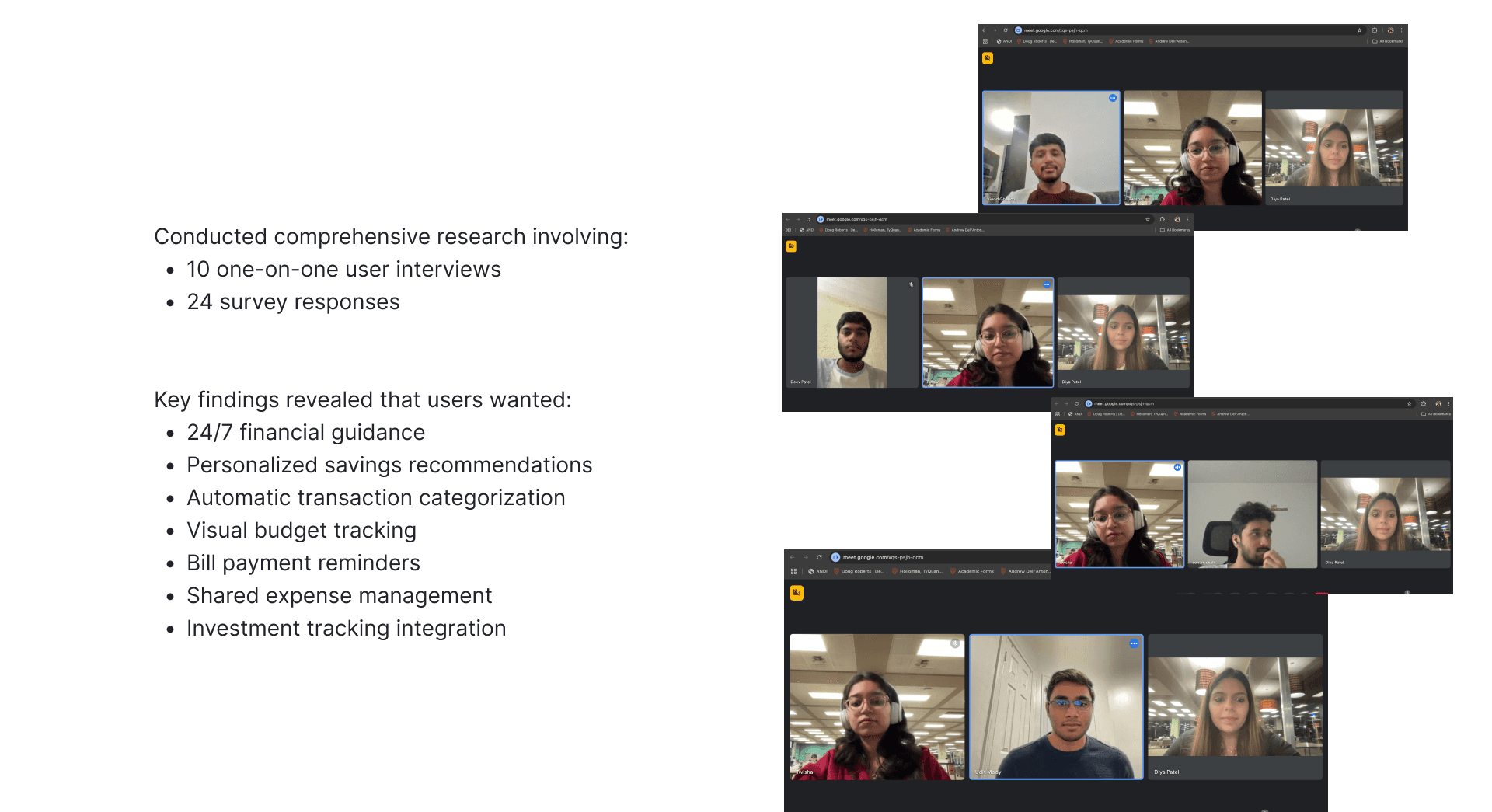
Primary Research
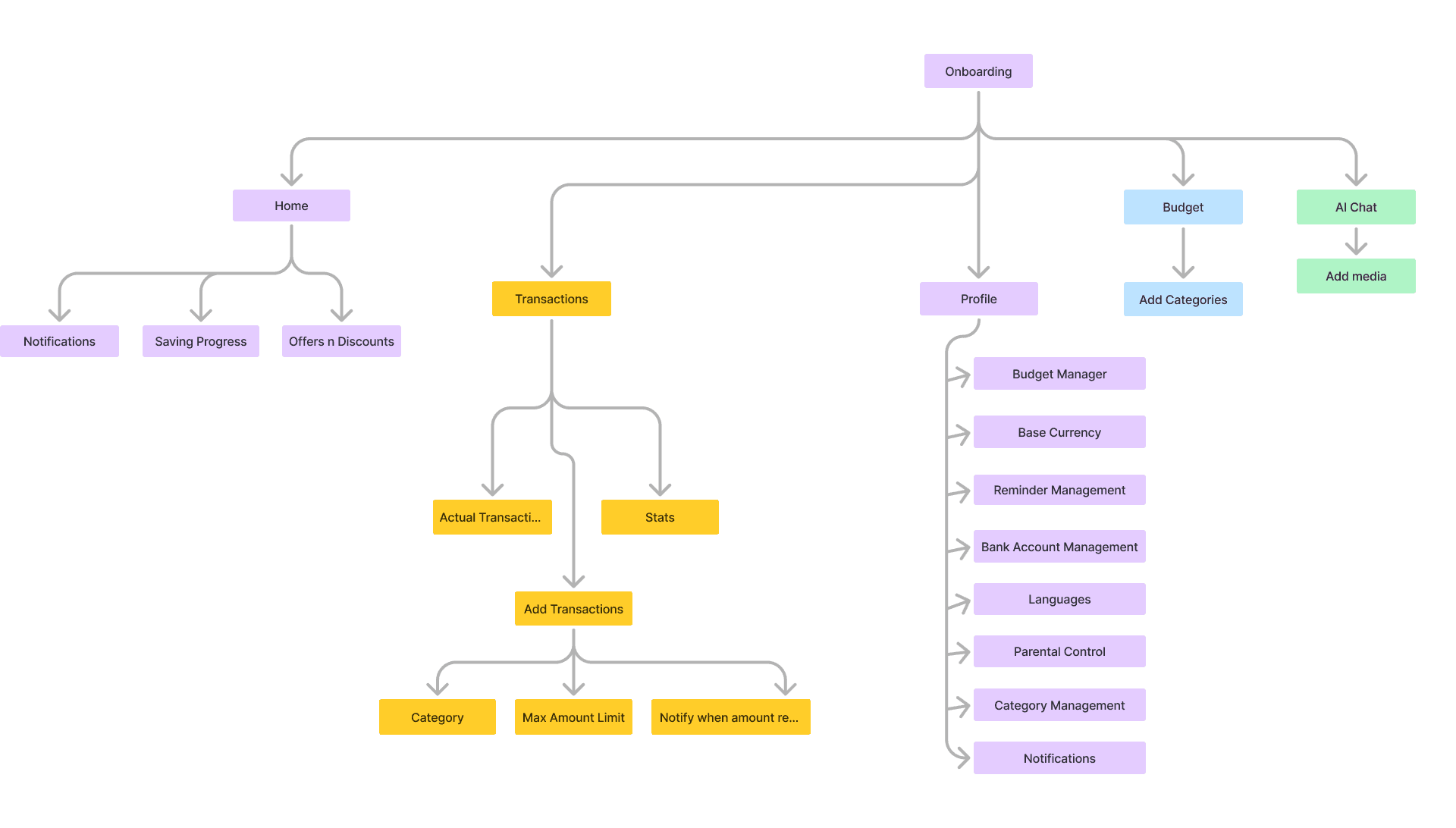
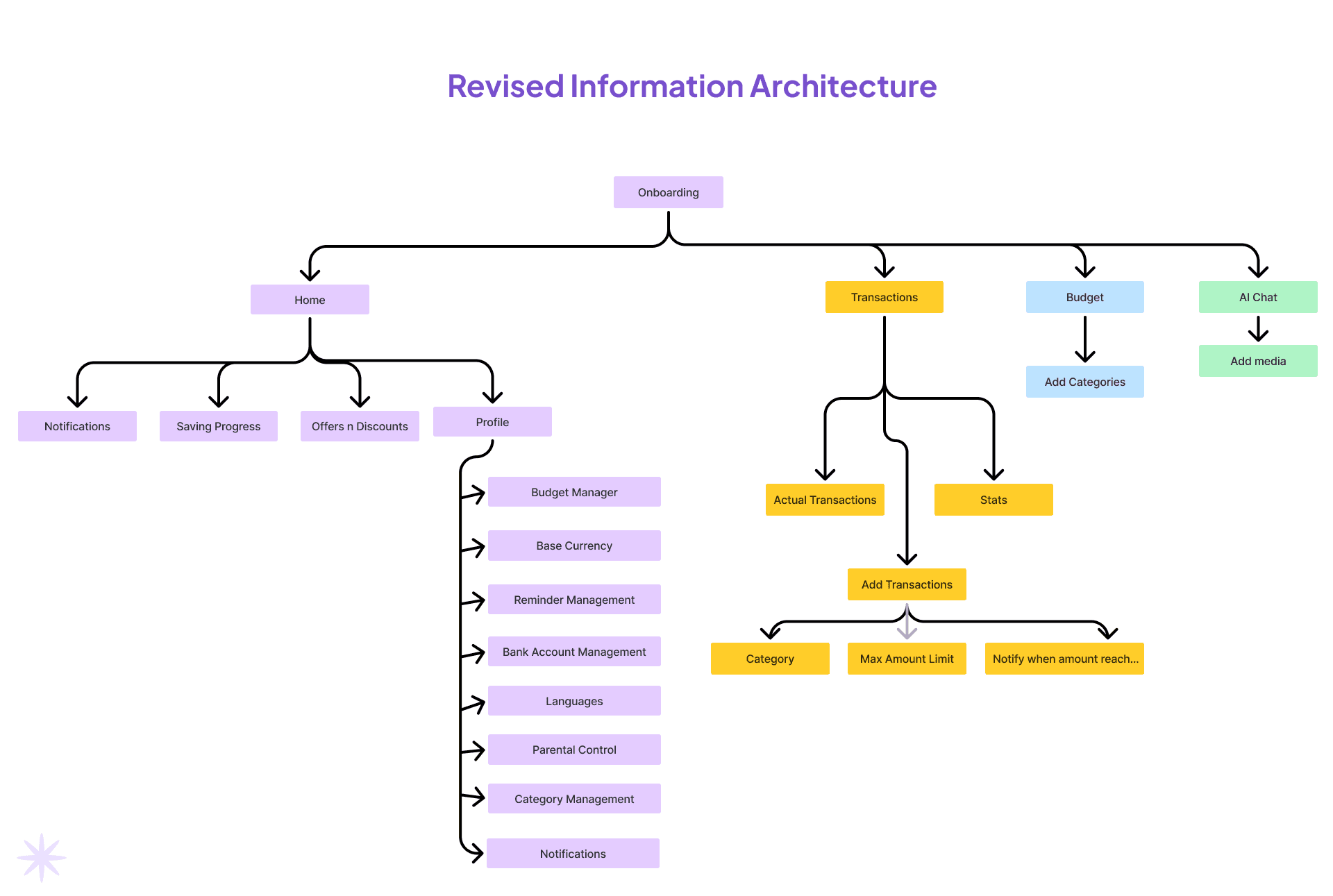
Initial Information Architecture
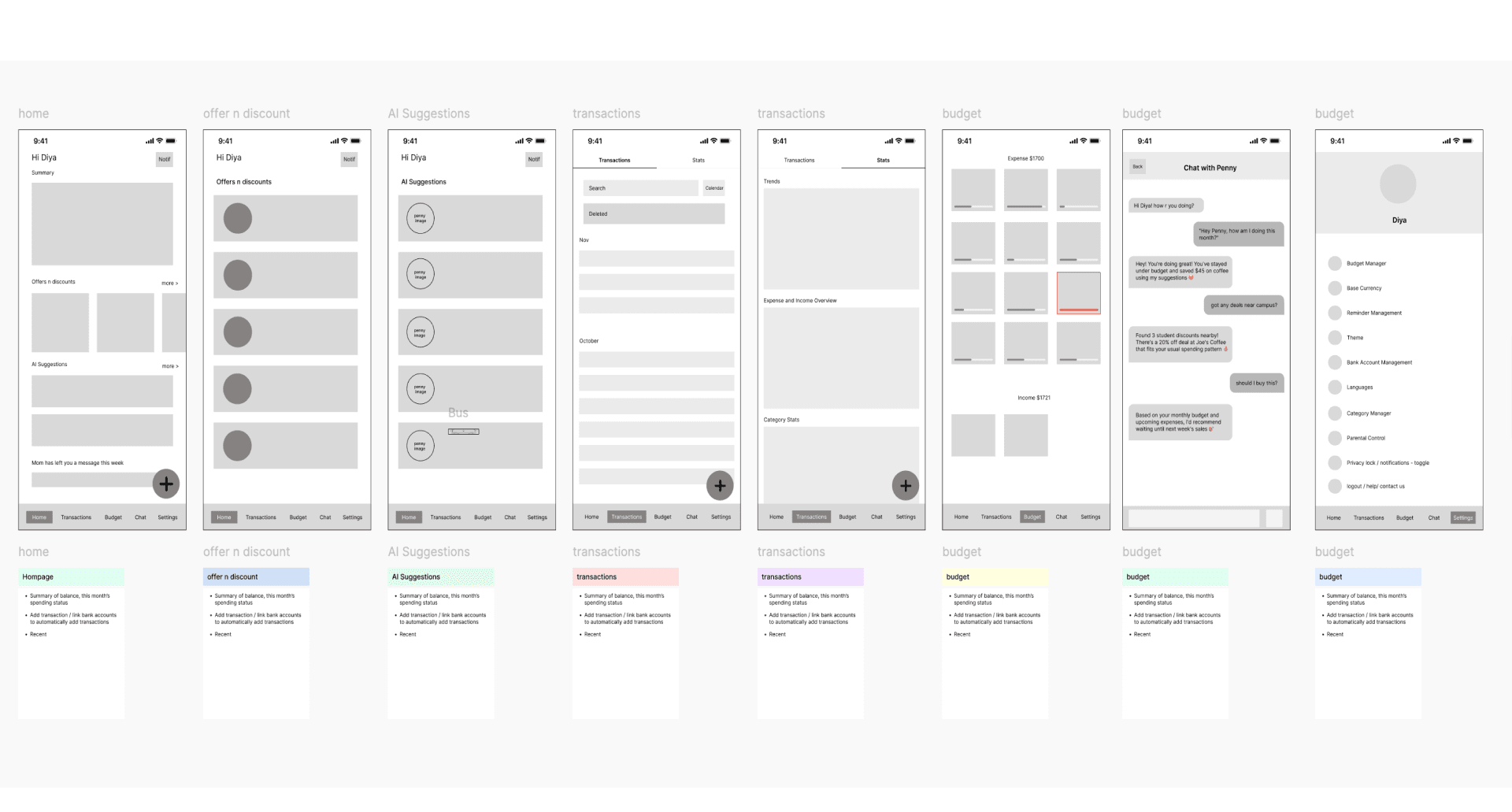
Wireframes
Time to conduct usability testing with the designs…
Users were supposed to finish 3 mains tasks
• Add a transaction (using receipt photo)
• Chat with penny
• Try understanding the statistics
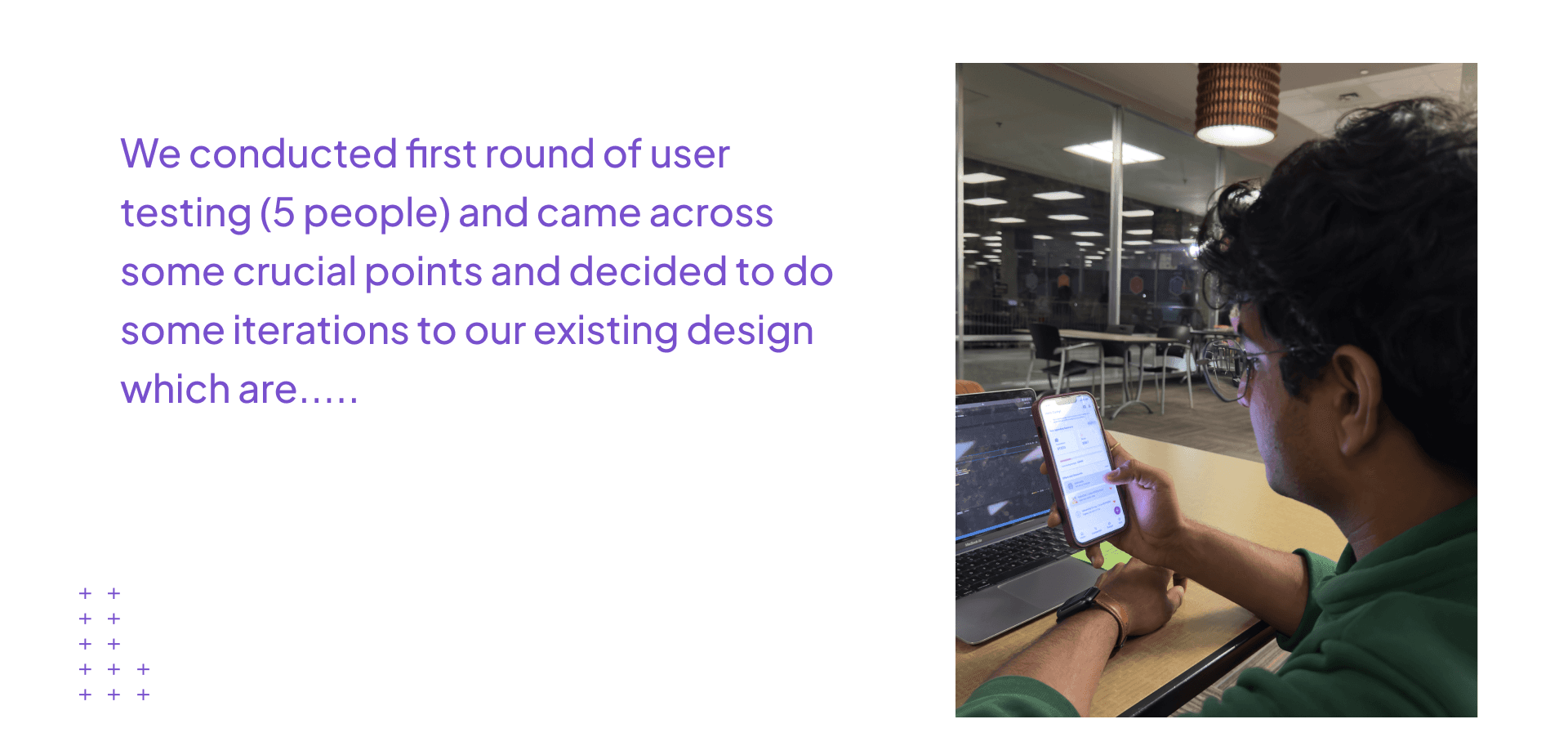
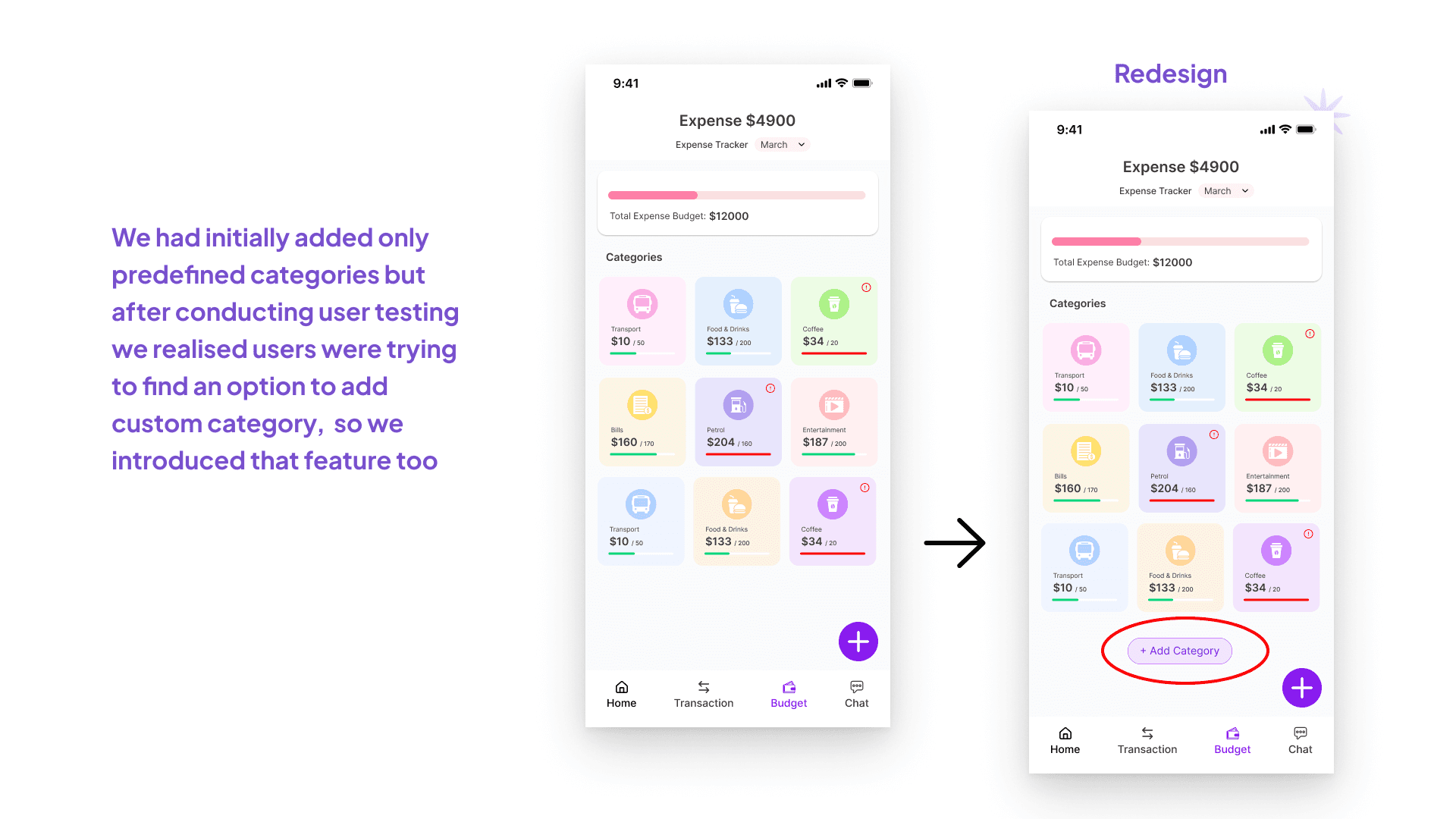
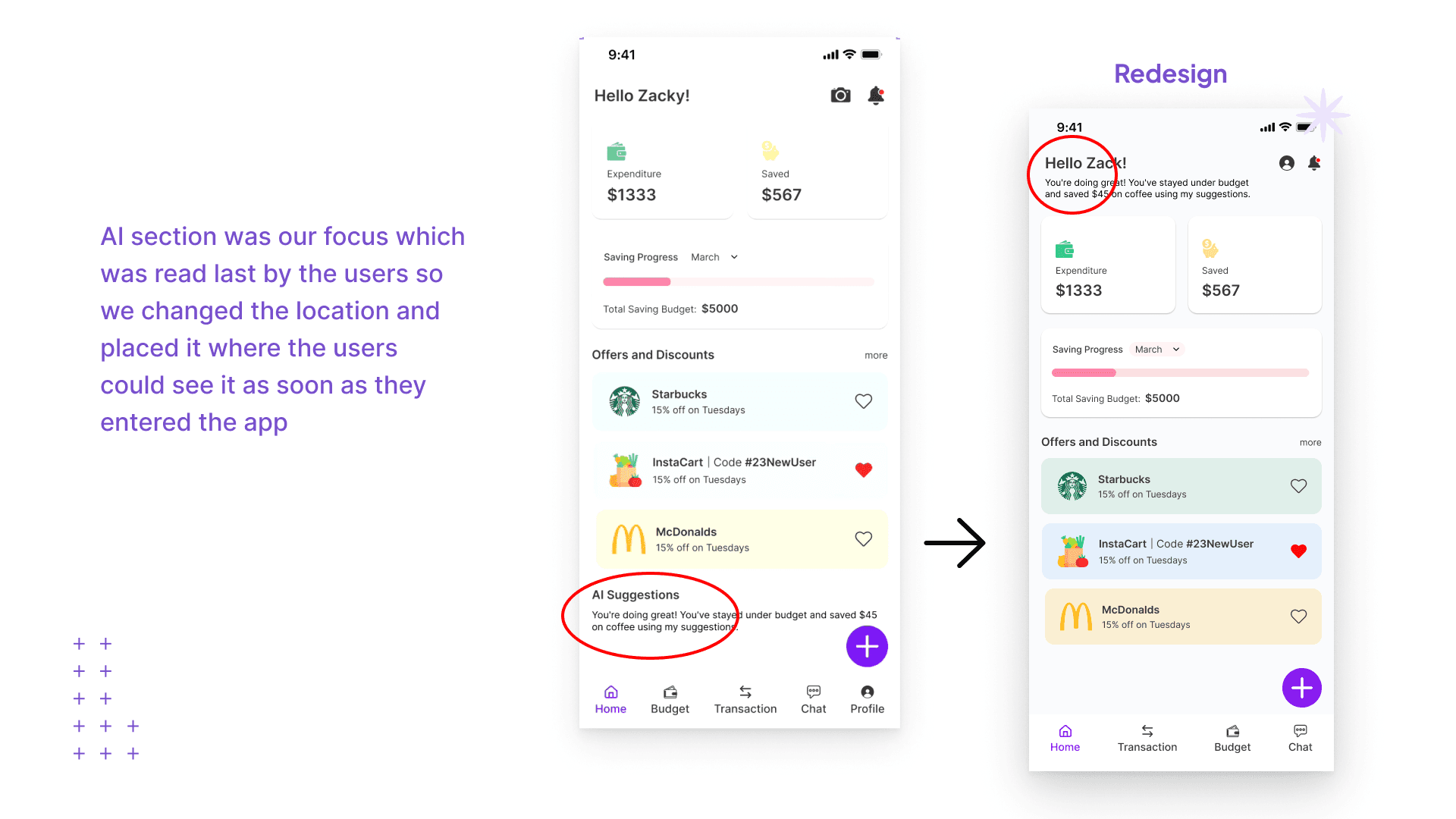
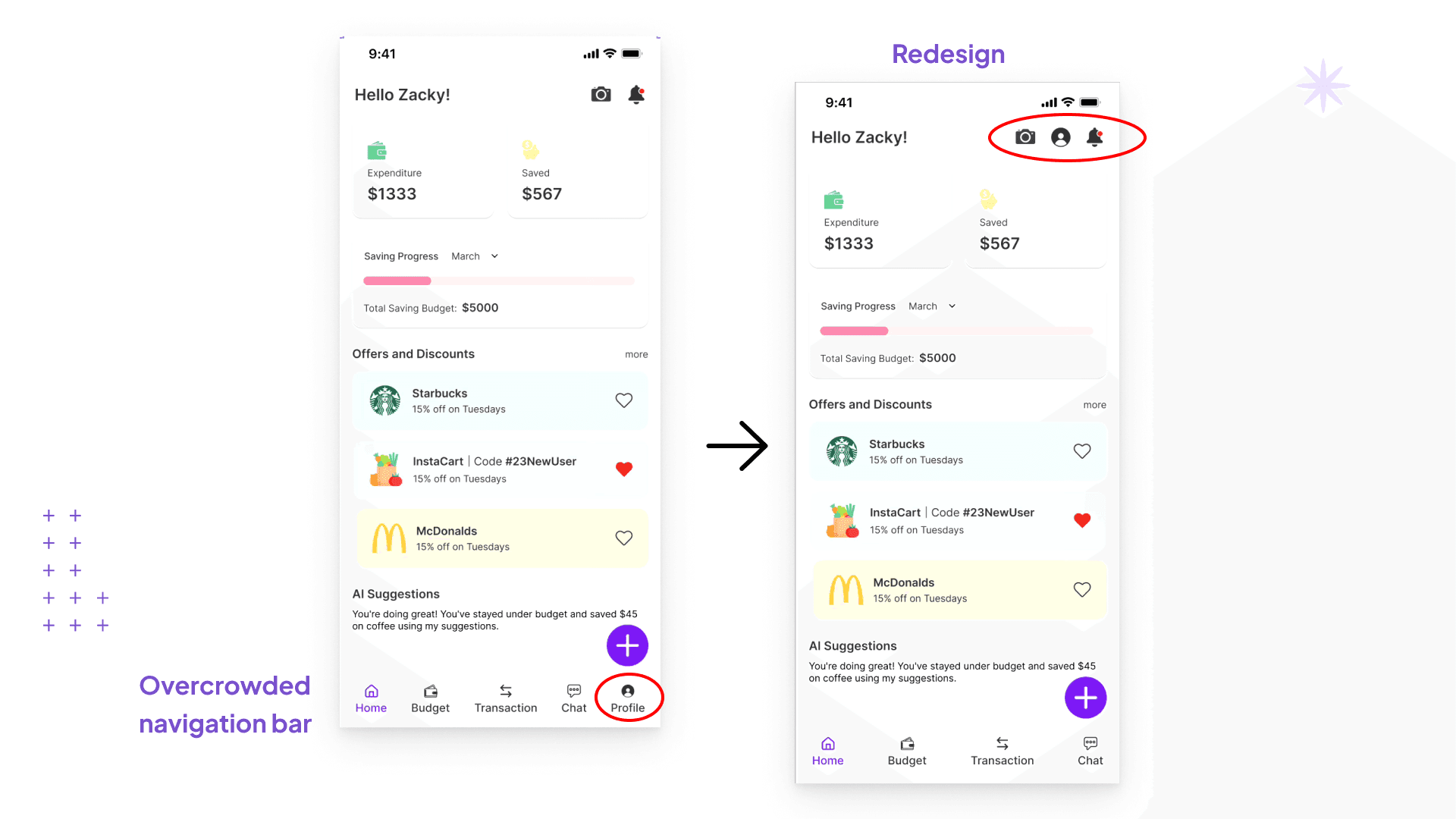
Redesigns after Usability Testing Round 1
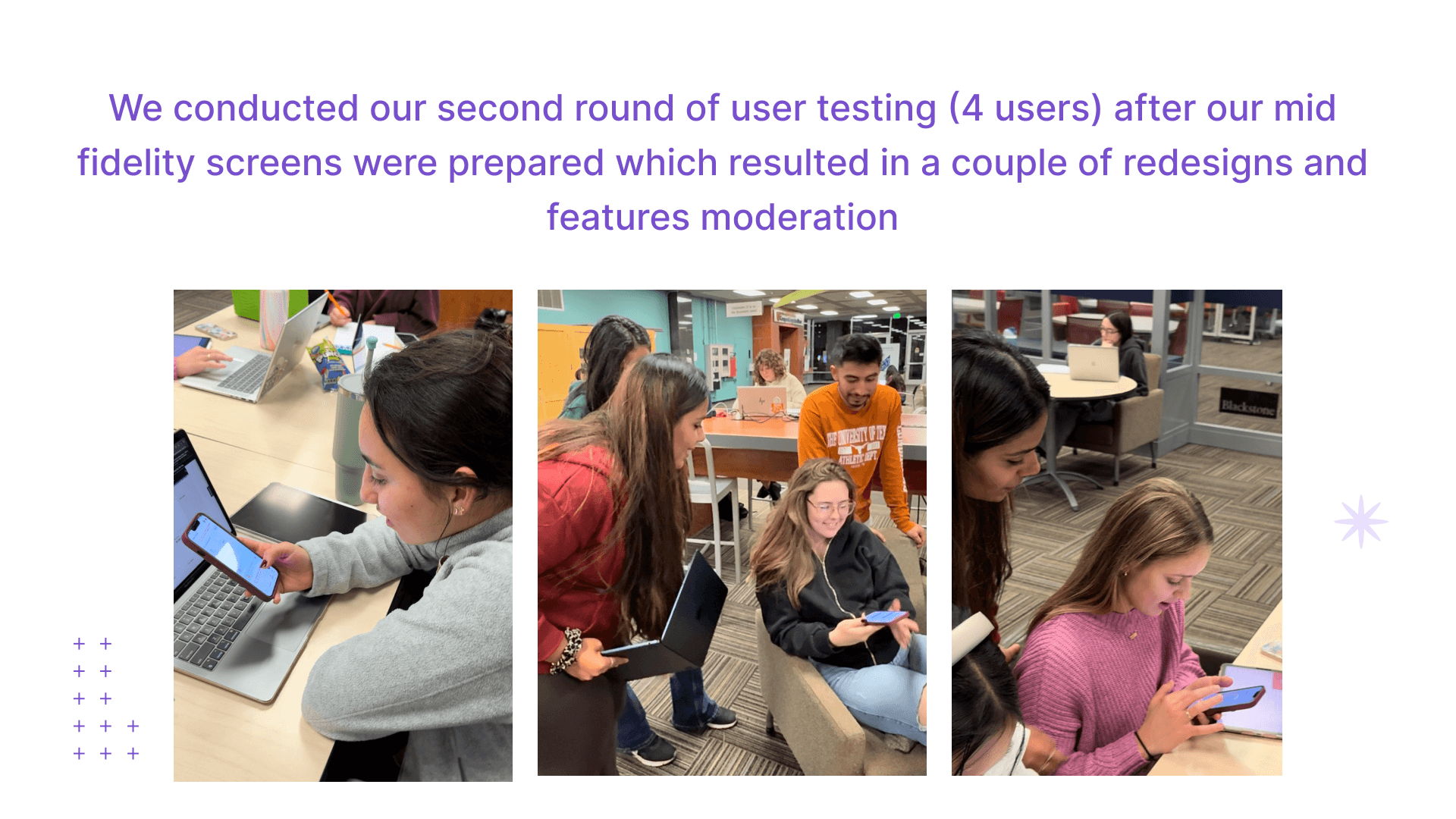
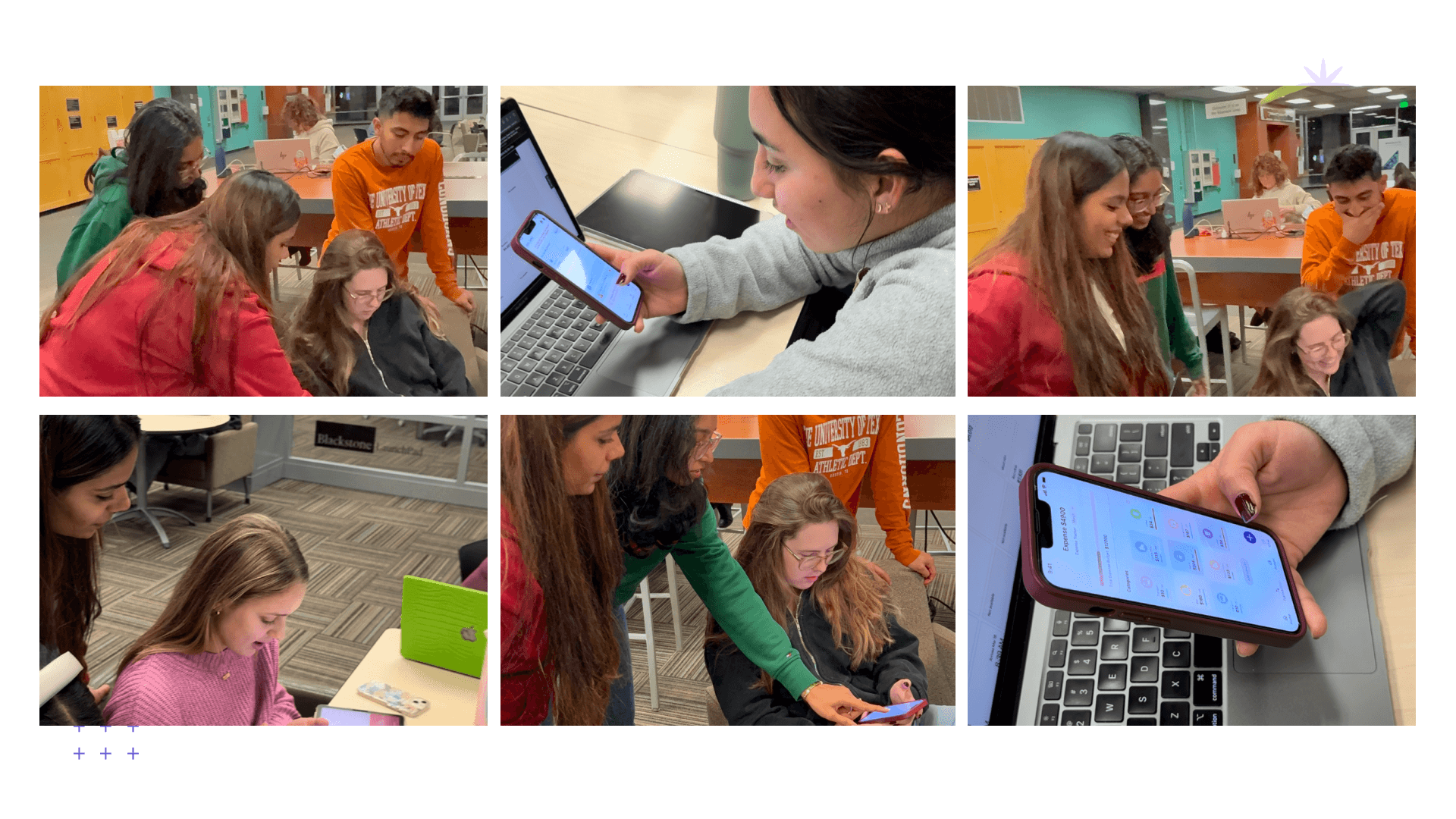
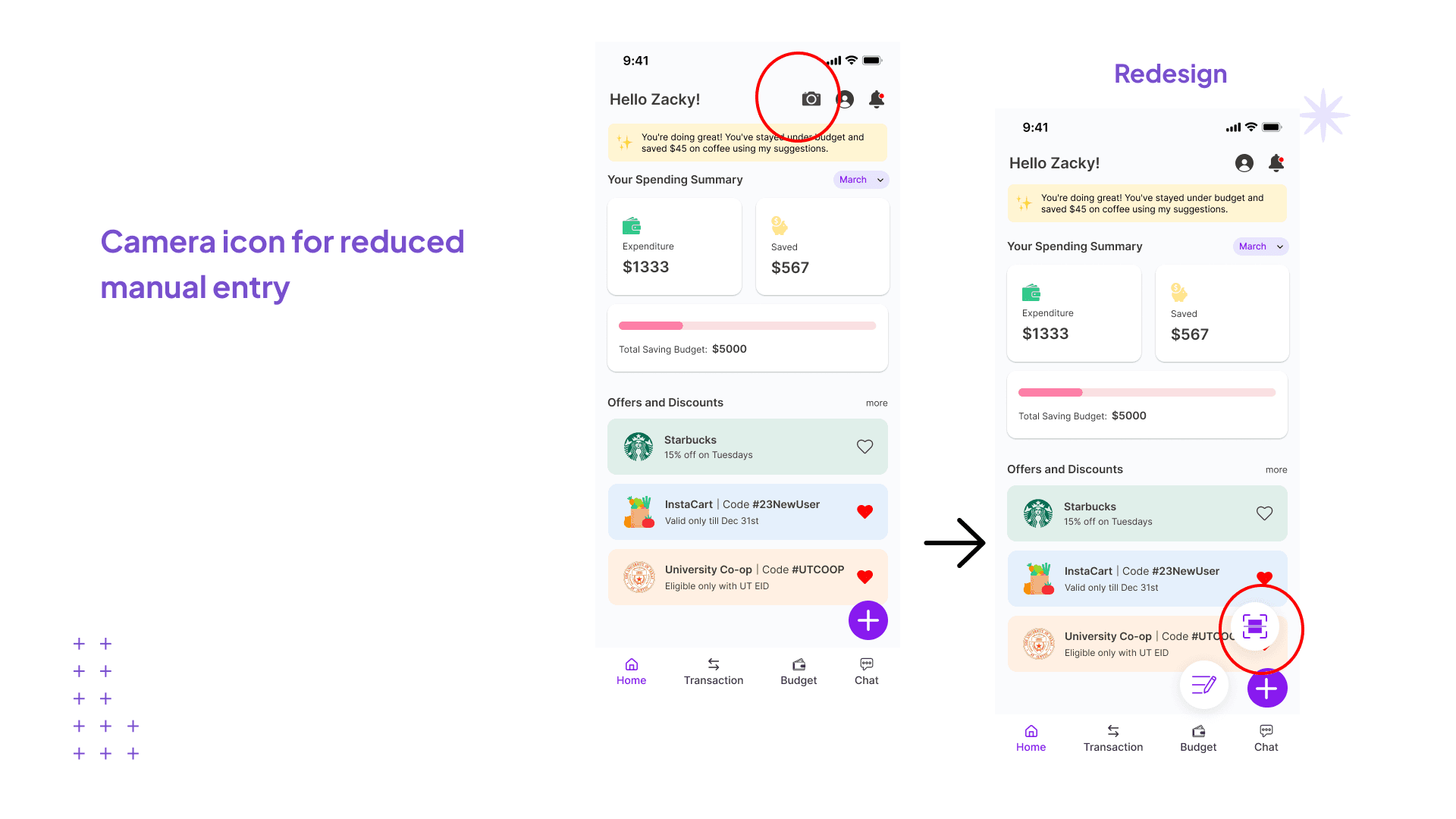
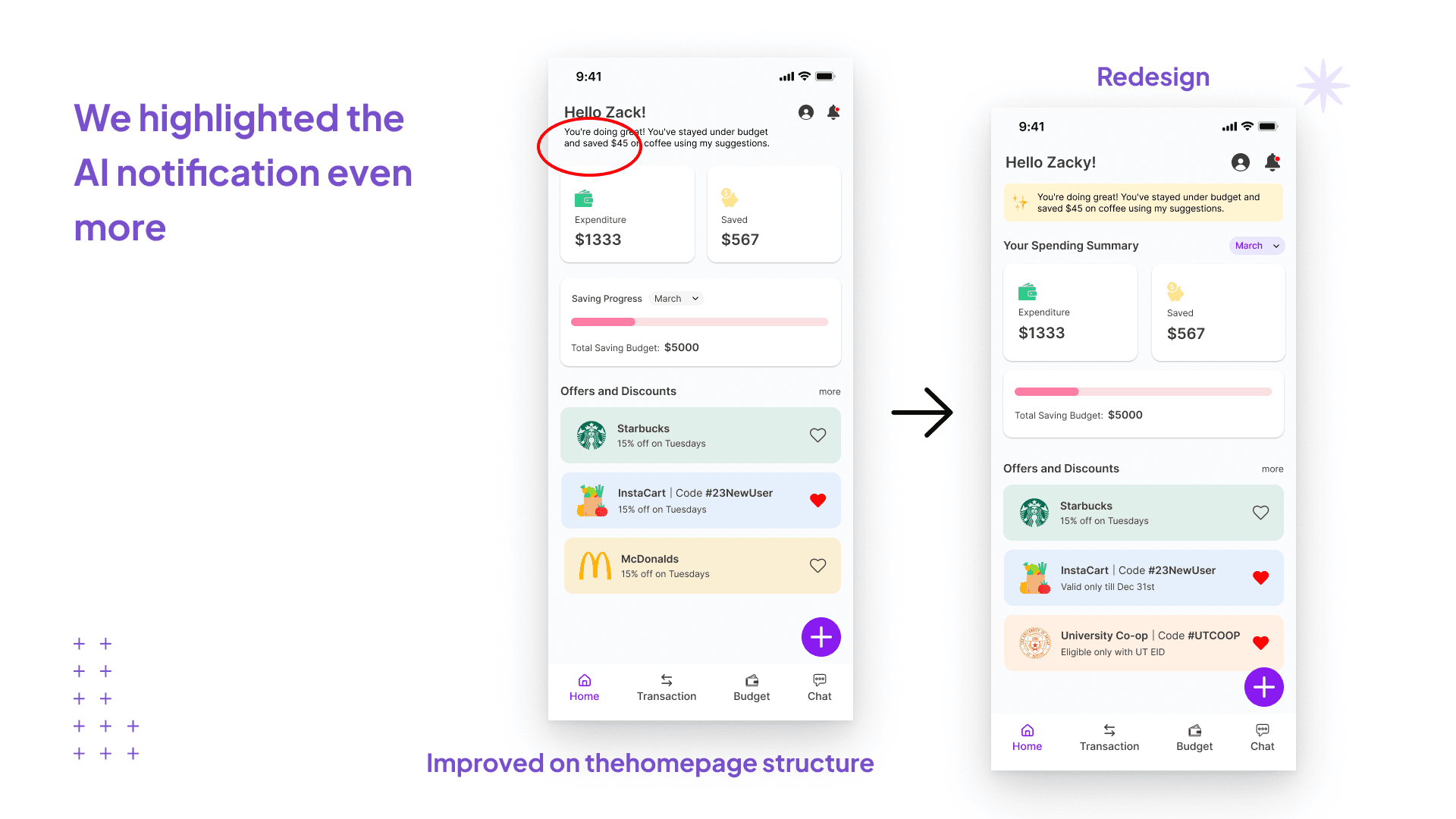
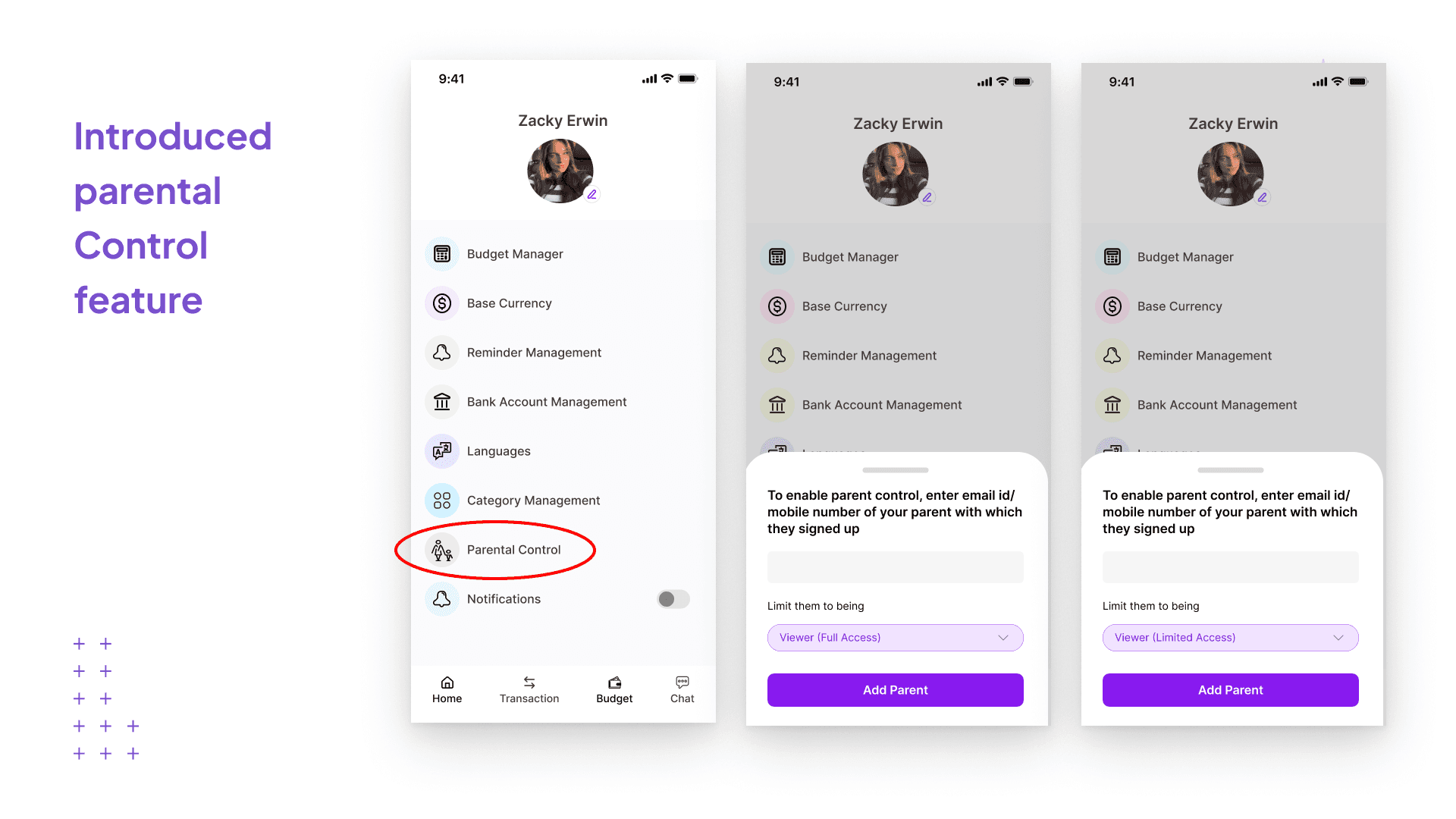
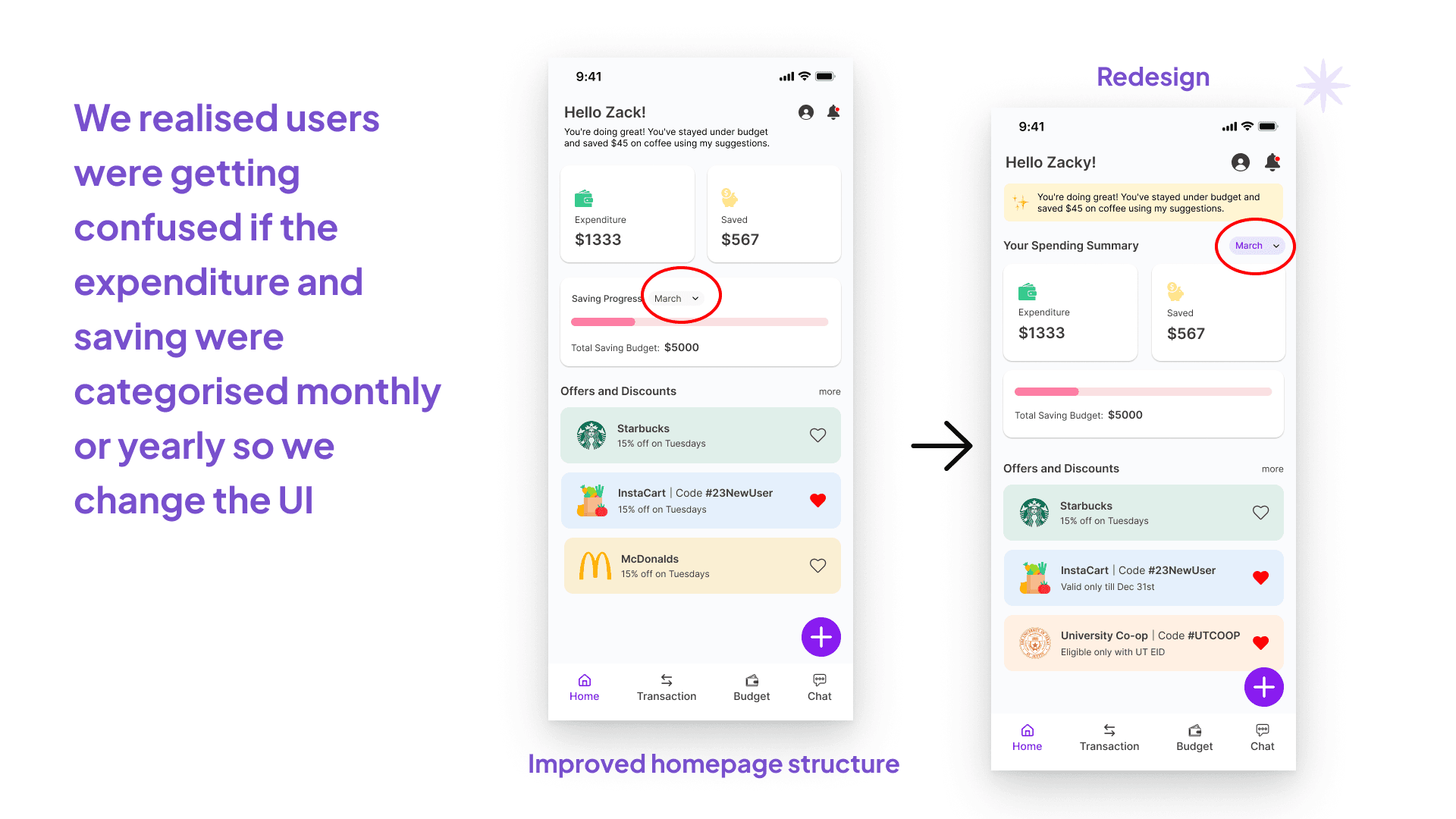
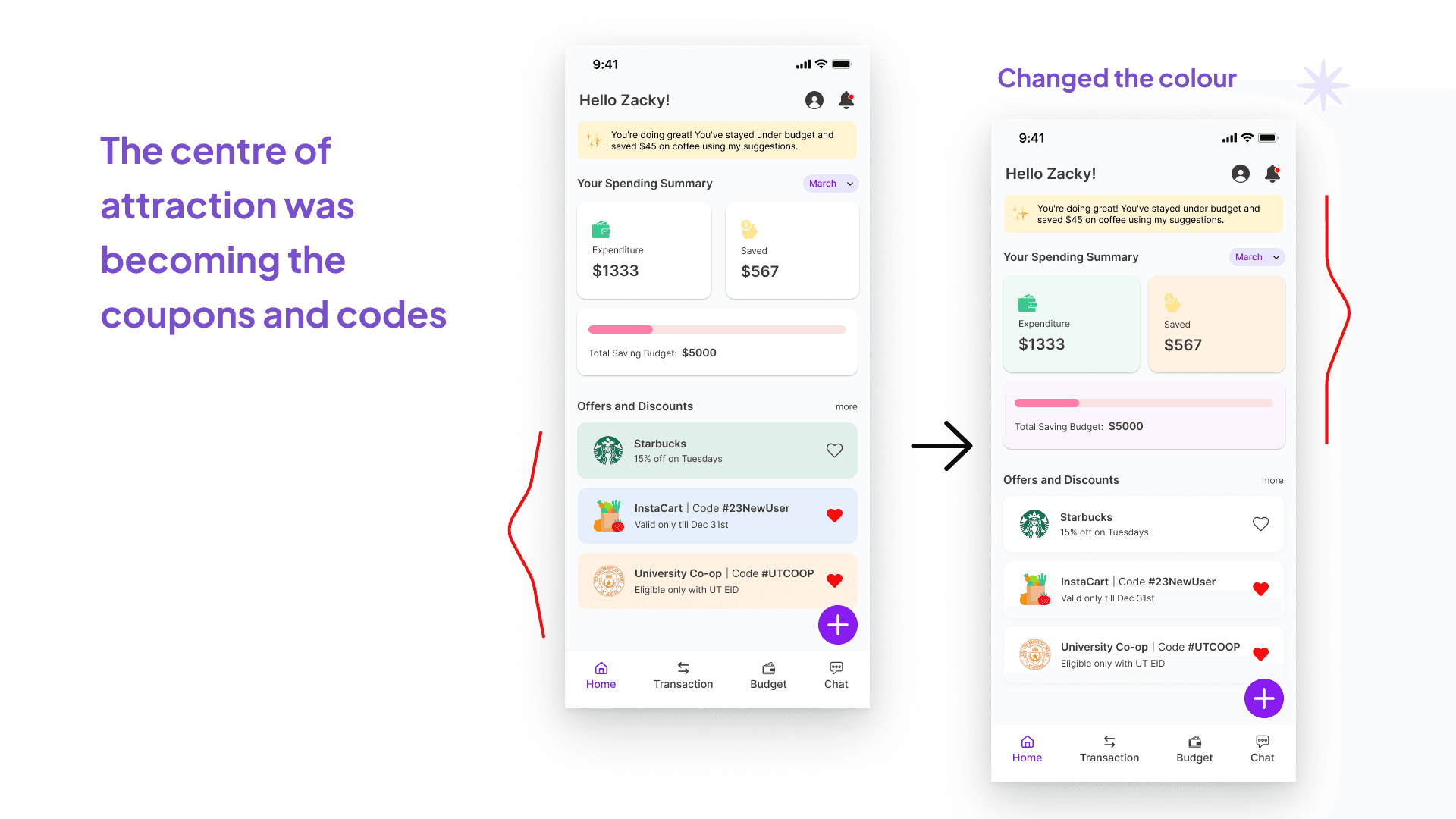
Changes we made to the design after usability testing round 2
How we would expand this if we had more time…
Gamification of Financial Literacy: Introduce interactive games and challenges to engage users, especially younger audiences, in learning money management skills.
Community Engagement: Build a community platform for users to share tips, success stories, and insights on achieving financial goals.
Integration with Financial Institutions: Partner with banks and fintech services to provide seamless account integration, bill payment automation, and investment tracking.
Some reflections..
Through this project we realised that regular user testing revealed critical insights, reminding us that a successful design evolves through continuous feedback and iteration.Also developing features like the Parental Control taught me the importance of creating inclusive designs that cater to different user roles and abilities.
Our design philosophy evolved from merely presenting data to creating a compassionate, personalized experience that demystifies financial complexity.
The key breakthrough was understanding that users don't just want numbers—they seek guidance, reassurance, and a sense of control over their financial narrative.
Our design prioritized transparency, emotional support, and adaptive learning, ensuring that every interaction feels like a conversation with a knowledgeable, supportive friend rather than a cold, transactional tool.
Conclusion
The SpendWise project exemplifies the power of user-centric design in addressing real-world challenges in financial management. By integrating features like an AI chatbot, automated budgeting, and parental collaboration tools, we successfully created a platform that simplifies finances for individuals and families alike. This journey reinforced the importance of iterative testing, stakeholder alignment, and inclusive design practices.
Looking ahead, SpendWise has the potential to grow into a comprehensive financial ecosystem, driving meaningful impact for diverse user groups. This project has been a valuable learning experience, strengthening our skills in empathetic design, innovation, and collaboration.